 By Editorial Team
If you want seriously smooth skin from a wax, you have to get the prep right, and that all starts with the optimal arm hair length. A lot of people just assume any length is fine, but showing up with hair that’s too short or too long can give you bad results, more pain, or even skin irritation. Getting the length right is what separates a clean, long-lasting wax from a frustrating, patchy job.
Key Takeaways
- Your arm hair needs to be at least 1/4 inch (6mm) long for wax to grip it, which usually means letting it grow for 2 to 4 weeks.
- Gently exfoliate your arms 24 to 48 hours before your appointment, this helps prevent ingrowns and gives the wax a better hold.
- Don’t put any moisturizer on your skin the day of your wax, since the wax needs a clean, dry surface to grab the hair.
- Tell your esthetician about any skin sensitivities or medications you’re on before they start.
I’ve been a waxing professional for over a decade, and I can’t tell you how many clients come in with hair that’s either barely there or way too long. Both situations just make the job harder and the results worse. There’s a real science to the ideal hair length for waxing. It allows the wax to shrink-wrap around the entire hair, not just the tip, so it can be pulled cleanly from the root. This is a big deal for arms, especially since the hair can be finer in some spots and coarser in others.
1. Assess Your Current Arm Hair Length
Before you even book a hair removal appointment, just take a second to check your current arm hair length. The sweet spot for an effective wax is hair that’s around 1/4 inch to 1/2 inch (6mm to 12mm) long. At that length, the wax can get a solid grip on the hair itself instead of just sticking to your skin, which is what allows for a clean pull right from the follicle. If your hair is any shorter than 1/4 inch, the wax will likely struggle to grab hold, resulting in a lot of broken hairs and missed spots. On the flip side, hair that’s a lot longer than 1/2 inch makes waxing more painful and messy because the long hairs can get tangled and create more drag on the skin.
An easy way to check is with a small ruler, or you can just compare it to a grain of rice, which is about 1/4 inch long. To get there, most people need to let their hair grow for about two to four weeks after shaving or using another removal method. That growth window isn’t random. It’s based on your hair’s natural growth cycle. The anagen (or active growth) phase for arm hair varies from person to person, but waiting long enough ensures that the majority of your hairs have actually cleared the skin’s surface and are ready to be removed.
Pro Tip: The “Grain of Rice” Rule
If you don’t have a ruler handy, a great visual guide is to aim for hair that’s about the length of a single grain of rice. It’s a simple reference you can see and feel. If your arm just feels stubbly or you can’t really pinch the hairs between your fingers, you’re definitely still too short.
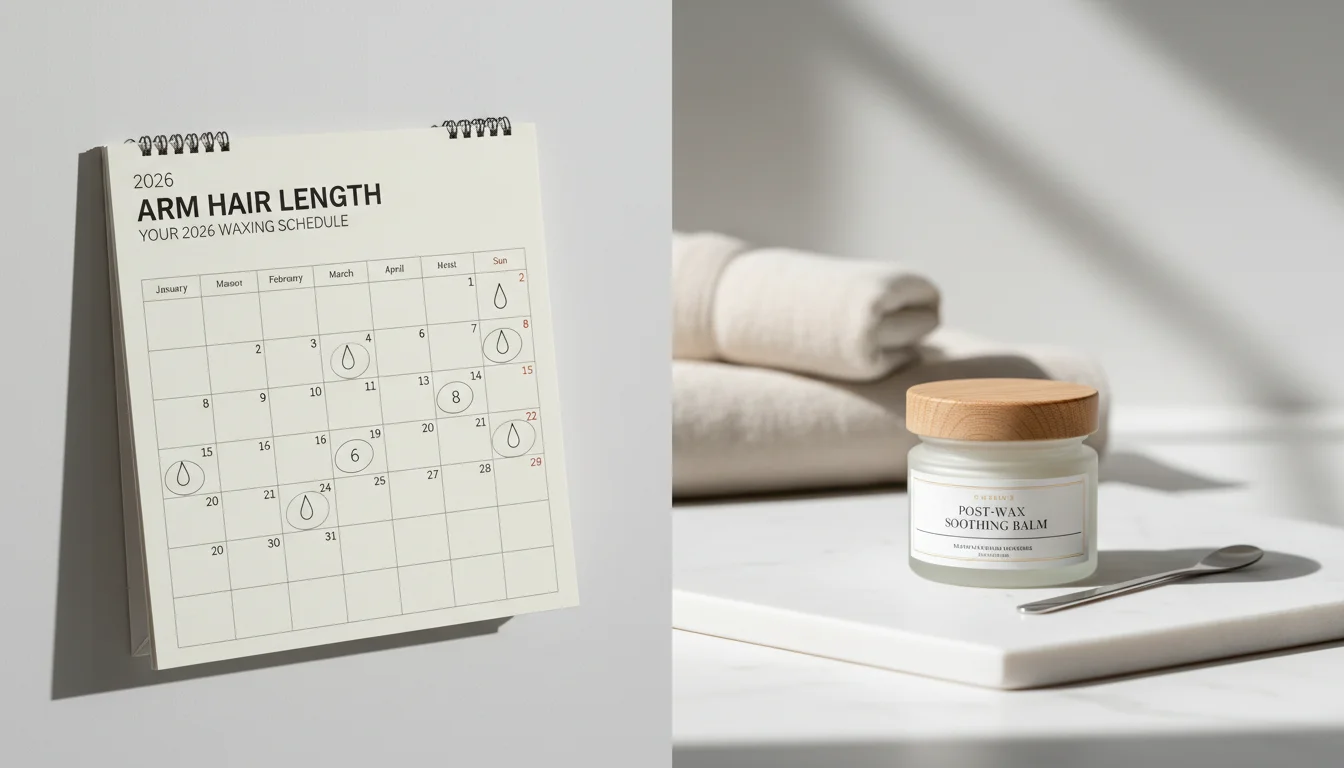
2. Plan Your Waxing Schedule Based on Growth
So you’ve checked your hair, now planning your waxing schedule is simple. If you just shaved, you’ll have to play the waiting game. For most people, that means no shaving for at least 14 to 28 days to give the hair enough time to clear that 1/4 inch minimum. One of the biggest mistakes I see is when clients shave “just a little bit” a week before their appointment, and it always ends in disappointment because half the hair is too short to grab.
Think about your schedule and any big events coming up. If you’ve got a vacation or a wedding, book your waxing appointment a few days beforehand to give any redness or sensitivity time to disappear. Being consistent with waxing is also a big deal. Sticking to a regular schedule, usually every three to six weeks, can actually make your hair grow back finer and sparser over time. That’s because repeatedly pulling hair from the root can damage the follicle, which dermatological studies on epilation confirm leads to weaker regrowth.
Discover the smoothest way to stay hair-free
Expert waxing that leaves you smooth for weeks. Find a top-rated studio near you.
Find a Wax Center Near You →Common Mistake: Trimming Too Short
Some clients think they’re helping by trimming super long hair at home, but it’s so easy to go overboard. Sure, trimming can be a good idea if your hair is well over an inch long, but if you cut it shorter than 1/4 inch, you’re right back where you started with hair that’s too short to wax. If your arm hair feels excessively long (think over an inch), just leave it. A professional can quickly and safely trim it to the perfect length before they start waxing, since they have the right tools and know exactly how short to go.
3. Exfoliate 24-48 Hours Before Your Appointment
How you prep your skin makes a huge difference in your waxing results. The most important thing you can do is to gently exfoliate your arms 24 to 48 hours before you come in. Exfoliating sloughs off the dead skin cells that can clog pores and trap hairs, which helps prevent ingrowns and lets the wax get a much better grip on the hair. You’re not trying to scrub your skin raw, just giving it a gentle renewal.
You can use a mild physical scrub, like one made with sugar, or a chemical exfoliant with something like glycolic acid (an AHA). Even the American Academy of Dermatology Association (AADA) backs gentle exfoliation practices for maintaining healthy skin, especially around hair removal. Just don’t go crazy with harsh scrubbing, because waxing already-irritated skin is going to be a lot more uncomfortable.
For example, a gentle cleanser like the CeraVe SA Cleanser has salicylic acid that can exfoliate without being too harsh or drying. Just use it in the shower with circular motions and rinse it off well. This simple prep leaves your skin clean, smooth, and ready to let go of hairs without a fight. I always tell my clients that well-exfoliated skin gives the wax a clean surface to work with, which is how we get the best results.
4. Keep Skin Clean and Dry on Waxing Day
On the day of your appointment, your only job is to make sure your skin is as clean and dry as possible. That means no lotions, no oils, no deodorant, and no thick creams on your arms. Any of that stuff leaves behind a film that acts as a barrier between the wax and your hair, so the wax can’t grip properly. That’s when you end up with missed hairs and a patchy finish.
It’s fine to shower before you come in, but use a simple, non-moisturizing soap and pat your skin totally dry. If you’re someone who gets sweaty, especially in a humid place like Atlanta, Georgia, you can apply a light dusting of a talc-free powder right before your service to absorb any extra moisture. It’s a step people often forget, but it really helps the wax wrap around each hair.
You want the wax sticking to your hair, not your skin. When there’s an oily or damp layer on the skin, the wax just can’t do its job, and you’ll get hairs that snap off at the surface instead of being pulled from the root. This is exactly why a pro will usually apply a pre-wax powder to get the skin perfectly prepped.
5. Communicate with Your Waxing Professional
You have to talk to your waxing professional. It makes a huge difference in how comfortable and effective your service is. Before they even start, let them know about any medications you’re on, especially skin-sensitizing ones like retinoids (for example, Tretinoin, which dermatologists at places like Emory Healthcare in Atlanta often prescribe) or oral acne meds like Accutane. These drugs make your skin thinner and more fragile which puts you at risk for skin lifting or tearing during a wax.
Also, mention any allergies you have or skin conditions like eczema and psoriasis. Have you had a bad waxing experience before? Tell them about it. A good professional can change their technique, switch to a different wax (like using hard wax instead of soft wax), or even suggest another hair removal method if waxing isn’t right for your skin at that moment. For instance, hard wax is generally better for sensitive skin or fine hair because it grabs the hair more than the skin.
Seriously, ask questions. Don’t be shy about voicing concerns. A real pro will be happy to explain what they’re doing, check in on your comfort level, and make sure you feel good about the whole process. Working together like that is what gets you the best possible results for your smooth arms.
Getting your arm hair to the right length is the first and most important step for a great wax. If you let it grow out, exfoliate properly, and show up with clean skin, you’re setting yourself up for a smooth, long-lasting result with way less discomfort.
What is the absolute shortest arm hair length for waxing?
You really need your hair to be 1/4 inch (approximately 6mm). If it’s any shorter, the wax just won’t have enough to grab, which leads to hair breaking off or being missed entirely.
How long does arm hair need to be for waxing if I just shaved?
If you’ve recently shaved your arms, you’ll need to let the hair grow for 2 to 4 weeks. That’s usually how long it takes to reach the 1/4 to 1/2 inch length that’s perfect for the wax to adhere to.
Can arm hair be too long for waxing?
Yes, it absolutely can. When hair gets much longer than 1/2 inch (12mm), it can make the waxing pull more painful and the whole process less clean. A good professional will just trim it down before they start.
Should I exfoliate my arms before waxing?
Yes, you should. Gently exfoliating your arms 24 to 48 hours before your appointment helps get rid of dead skin and can prevent ingrown hairs, making the wax much more effective.
What should I avoid putting on my arms on the day of my waxing appointment?
On the day you get waxed, don’t put any lotions, oils, deodorants, or thick moisturizers on your arms. All those products create a barrier that stops the wax from gripping the hair properly.


