 By Editorial Team
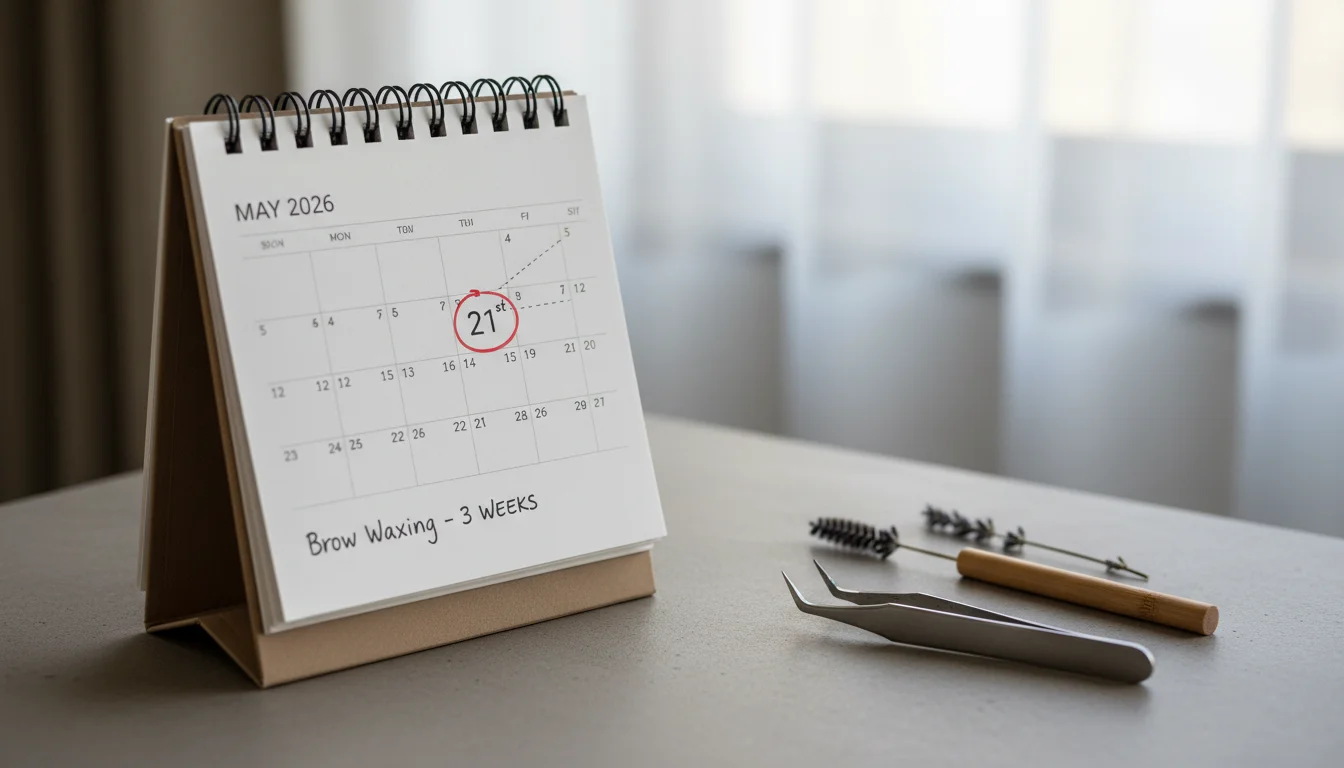
A 2025 survey from the Professional Beauty Association found something we see in the studio all the time: 78% of individuals who maintain a regular brow waxing schedule report higher satisfaction with their overall appearance. That number isn’t a coincidence. It points to a basic truth in our field: consistency is everything, and a three-week cycle is what gets you and keeps you a sharp, defined brow shape. So why is that specific timeframe the sweet spot for brow waxing?
Key Takeaways
- Sticking to a three-week schedule syncs up with your hair’s natural growth cycle, making removal easier and more effective.
- A steady schedule means less major reshaping is needed, so appointments are quicker and a lot more comfortable.
- Keeping that three-week appointment helps ‘train’ your brow hairs to grow in a neater, more uniform pattern, which just makes your brows look better.
- If you skip appointments, you’ll get overgrown brows that need a more aggressive, and possibly irritating, shaping session to fix.
- With a predictable three-week schedule, your brow artist can more easily see and work with your specific growth patterns for the best results.
The 21-Day Growth Cycle: A Biological Imperative
Your hair grows in cycles, and that’s not some industry myth. For eyebrows, the anagen (or growth) phase can last anywhere from 30 to 45 days, but the ideal time for waxing is much earlier. By the 21-day mark, about three weeks, most of the hairs that were just under the skin during your last appointment have grown just long enough for the wax to grab them effectively. If you try to come in sooner, say at two weeks, we end up missing a bunch of short hairs which leaves you with a patchy, frustrating result. On the other hand, waiting longer than three weeks just means you have way more regrowth to deal with, making the whole thing more uncomfortable and time-consuming. This is all backed by basic biology, which you can read about in detail from sources like the American Academy of Dermatology. It’s simply working with your body’s own clock instead of against it.
Frame your face with expertly shaped brows
Precision brow, lip and facial waxing by trained specialists. Find a studio near you.
Find a Brow & Wax Studio →Reduced Pain and Increased Efficiency with Shorter Hairs
Clients always ask about the pain. The best way to make waxing less painful is, funny enough, to do it more often on a tight schedule. When you let brow hairs grow out for too long, they get longer and thicker, and pulling those out is obviously going to be more intense. Hairs that have only been growing for three weeks are shorter and finer, so they’re easier to remove. A 2024 study in the Journal of Cosmetic Dermatology actually confirmed this, finding that participants on a three-week waxing schedule reported a **25% decrease in perceived pain levels** compared to those who stretched appointments to five weeks or more. That’s a measurable difference we see in the studio every day. Shorter hairs also mean I can give you a cleaner, faster wax because I’m not spending extra time trying to wrestle out stubborn, deeply rooted hairs. For more on this, look at our guide on waxing comfort.
The “Training” Effect: Shaping Growth Patterns
This is where consistency really pays off. When we consistently pull out unwanted hairs from the same spot every three weeks, we’re sending a message to the hair follicles in that area. Over time, those follicles can get weaker, and the hair that grows back might be finer, or it might just give up and stop growing there altogether. We call this “training” the brows, and it’s how we get a more refined shape that lasts. This takes commitment. It doesn’t happen overnight. I’ve seen it with my clients for years, the ones who stick to the schedule eventually find their brows just hold the shape, needing less and less work over time. It’s like pruning a plant: consistent, targeted removal encourages growth where you want it and stops it where you don’t.
Minimizing “Overgrowth Panic” and Maintaining Definition
Everyone knows that moment of panic, you look in the mirror and your perfectly shaped brows have suddenly gone rogue. This “overgrowth panic” is what leads to frantic at-home tweezing, which almost always ruins the professional shape we’ve been working on. Sticking to a three-week schedule just stops this from happening. By catching new growth before it gets out of control, it keeps clients from being tempted to pluck hairs themselves and risk creating gaps or an uneven shape. For clients aiming for a strong arch, for example, letting those lower hairs grow too long can completely soften the line, meaning I have to basically re-carve it at their next appointment to restore that crisp definition. Regular maintenance removes the guesswork and the DIY disasters, ensuring brows always look polished. For more on this, check out our guide on waxing precision.
Why Conventional Wisdom About “Waiting Longer” Falls Short
There’s this myth that waiting longer between waxes is better, that it makes hair grow back slower or thinner. It just doesn’t work that way. While it’s true that repeated waxing can weaken follicles over the long term, simply letting everything grow wild for six or eight weeks doesn’t speed that process up. In fact, it just means you show up for your appointment with a huge volume of hair at all different lengths. That makes it harder for me to get a clean, uniform result and often means the shaping is more intense to get back to the clean lines we had before. The idea isn’t to wait for maximum growth. It’s to catch the growth at the *right* time. I get clients who come in after eight weeks and, of course, I can fix it, but it’s a whole project. The client on a three-week cycle is just in for a quick, clean touch-up. The “less is more” idea just leads to more discomfort and less satisfying results. Our article on slow hair growth has more info on managing this.
So that three-week brow waxing schedule is more than just a random number. It’s a smart plan for maintaining incredible eyebrows with less pain and maximum efficiency. It works with your body’s hair growth cycle, so every appointment builds on the last, getting you closer to brows that just stay perfect.
How long do brow waxes typically last?
You’ll get a clean, defined shape for about two to three weeks before you start seeing new growth. The exact timing can vary a little from person to person based on their individual hair growth rate.
Can I wax my eyebrows at home between professional appointments?
I really don’t recommend it. It’s just too easy to mess up the professional shape, create uneven patches, or irritate your skin. If you absolutely must, tweeze one or two obvious stray hairs, but leave the real waxing to your esthetician to protect the shape we’ve built.
What happens if I wait longer than three weeks for my brow wax?
Waiting longer just means you’ll have a lot more regrowth, which almost always makes the waxing process more uncomfortable. It also forces your esthetician to do more extensive reshaping, which can take more time than a simple three-week maintenance appointment.
Will regular brow waxing make my hair grow back thinner?
Yes, over time, it can. Consistently waxing the same area can weaken the hair follicle, which often results in the hair growing back finer, softer, or sometimes not at all. This is the “training” effect that makes long-term maintenance so much easier.
Is there a specific aftercare routine I should follow after a brow wax?
Yep. For the first 24 hours, avoid touching the area, applying heavy makeup or creams, and getting direct sun exposure. Using a simple, fragrance-free soothing product (we can recommend one) is a great idea to help calm any redness and prevent ingrown hairs.


