 By Editorial Team
The central question in textiles is how you create exciting, high-performance fabrics without the huge environmental bill. For years, our manufacturing methods have been incredibly resource-intensive, which creates a constant headache for designers trying to get both aesthetic quality and some ecological sense. The BYBORRE DUNE collection, which was on display at the London Design Festival, is a solid step toward solving this puzzle by fundamentally changing how textiles are engineered.
Key Takeaways
- BYBORRE DUNE uses a proprietary 3D knitting process to build multi-layered fabrics that have better functional properties while creating almost no material waste.
- The collection is built on circularity principles, using recycled content and designing the fabric so it can be recycled at its end-of-life, which is a big departure from linear production.
- By using digital design tools and making fabrics on-demand, the process gives you exact control over materials, preventing overproduction and making resource use far more efficient.
- BYBORRE’s method proves that high-performance textiles can be made with a much lower environmental footprint than you’d get from conventional woven fabrics.
For a long time, textile designers were stuck with a bad trade-off. If you wanted intricate textures or functional depth in a fabric, you were looking at a complex, multi-stage manufacturing chain that guzzled water, energy, and raw materials. Just think about how a standard layered fabric is made. You have to weave or knit different layers, then stick them together with lamination, stitching, or bonding. Every single one of those steps adds to the carbon footprint and creates waste, from fabric off-cuts to chemical glues. That linear “take-make-dispose” model became the default, even as everyone got more worried about the environmental cost.
The first attempts to fix this were all about substituting materials. People started switching from virgin polyester to recycled polyester, or from standard cotton to organic cotton, which definitely were improvements. But those changes didn’t actually fix the broken manufacturing model. The core processes which were still all about traditional weaving and cutting, remained incredibly resource-intensive. A designer could specify a sustainable yarn, only to watch all the environmental benefits get wiped out by an inefficient production line. This was the “what went wrong first” phase, where the focus was entirely on the inputs without rethinking how the thing was actually made.
The real fix, which people like the team at BYBORRE figured out, demanded a complete teardown of how we think about making textiles. Their whole approach is built on digital knitting technology, and more specifically, advanced 3D knitting. This technique lets you create complicated, multi-layered fabrics in a single, unbroken process, starting directly from the yarn. The DUNE collection is a perfect example, showing how you can engineer the structure and texture right into the fabric itself, instead of adding it on later through separate, wasteful operations.
This single-step production gets rid of a ton of energy-hungry stages. You don’t need separate weaving, cutting, or the extensive post-treatment processes that usually involve nasty chemicals. Digital knitting is also so precise that it creates way less material waste. Unlike the old cut-and-sew methods where you stamp patterns out of huge rolls of fabric and leave big piles of scraps, 3D knitting produces the exact shape and structure you need. The off-cuts are practically zero. This is a huge shift in efficiency.
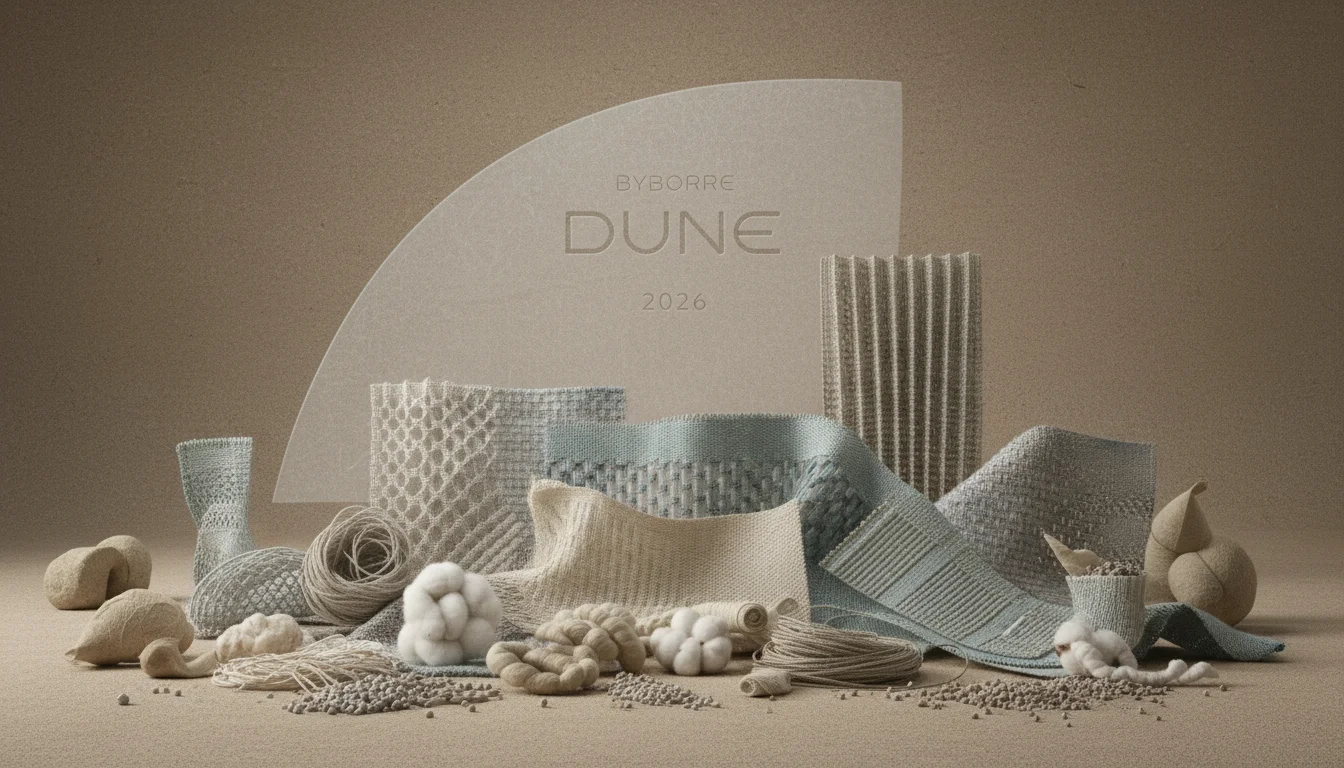
The DUNE collection itself, which we saw at the London Design Festival, really shows off the aesthetic and functional range this opens up. The fabrics have this unique, rolling texture that looks a lot like sand dunes (hence the name). That texture isn’t just for looks. It’s part of the fabric’s engineered structure, giving it insulation, breathability, and toughness. A report from the Ellen MacArthur Foundation on circular textiles argues this kind of integrated design is exactly what’s needed to move to a real circular economy, where things are designed from the start to last a long time and be easy to recycle.
Discover the smoothest way to stay hair-free
Expert waxing that leaves you smooth for weeks. Find a top-rated studio near you.
Find a Wax Center Near You →And BYBORRE’s focus goes beyond just the manufacturing process to the materials themselves. The DUNE collection frequently uses recycled and responsibly sourced yarns like recycled polyester and organic cotton. When you combine these sustainable inputs with their super-efficient 3D knitting technology, you get a double win. The material choice cuts down on the need for virgin resources, and the production method slashes the environmental cost of turning those materials into a finished textile. This complete view of sustainability, from the fiber all the way to the final fabric, is what makes this kind of work so important.
What you end up with is a group of textiles that look amazing, perform exceptionally well, and carry a much smaller environmental burden. The precise digital control you get with this knitting process makes on-demand production possible, which helps eliminate the waste from having too much stock. This is a world away from the traditional fashion cycle, which is infamous for producing huge quantities of unsold inventory that just gets dumped in landfills. A study from the United Nations Environment Programme (UNEP) confirms that textile waste is a massive global problem, so these kinds of production models are becoming essential.
The functional upsides are just as strong. The multi-dimensional structures you can create with 3D knitting can provide better thermal regulation, moisture-wicking properties, and more durability than single-layer fabrics. This means the products made from these textiles perform better and last longer, which also helps with sustainability by extending their useful life. Think of performance clothing or technical upholstery. Being able to engineer specific functional zones right into the fabric without adding more layers or chemical finishes opens up a ton of new design possibilities.
I’ve seen firsthand on different projects how limiting traditional textile manufacturing can be, where hitting certain aesthetic and performance goals meant you had to compromise on sustainability. The amount of water and energy that gets consumed, especially in the dyeing and finishing stages, is just wild. What BYBORRE and others are showing with things like DUNE is that it doesn’t have to be an either/or situation. We can actually get both top-tier performance and environmental responsibility.
The effect of work like BYBORRE DUNE goes way beyond a single collection. It forces the whole industry to look at more sustainable practices. As more designers and brands see the clear advantages of 3D knitting and circular design, it puts pressure on conventional manufacturers to adapt or get left behind. This starts a ripple effect, slowly turning a historically wasteful industry into one that’s much more aware of its ecological footprint. The London Design Festival is the perfect stage to show off these developments and get more people on board.
This change isn’t just about doing less harm. It’s about making better things. When designers have tools that let them engineer materials with this much precision, they can get to levels of comfort, durability, and function that were impossible before without building complex, multi-part assemblies. It allows form and function to be deeply connected, with the look of the fabric being a direct result of its performance characteristics. That’s a powerful combination.
In the end, the BYBORRE DUNE collection and the thinking behind it show a clear path forward for the textile industry. By using advanced manufacturing tech like 3D knitting and putting circular design principles at the very start of the process, it’s totally possible to make fabrics that are both forward-thinking and environmentally sound. This complete approach makes sure that progress in design isn’t happening at the planet’s expense.
The future of textiles is in intelligent design and production, where you’re considering the impact and circular potential of every fiber and every process. That means thinking about a product’s entire life, from its raw materials to how it will be recycled or biodegrade, not just its immediate use. It’s a complicated problem, but one that smart people are actively solving, one intricately knitted fabric at a time.
Adopting these new methods means we have to stop just slapping “green” labels on the same old products and actually commit to a deep change in how we make things. It’s going to require investment, education, and a real willingness to question how it’s always been done. But the results you can measure, in less waste, lower energy use, and better product performance, make a very strong argument for making the change.
The shift from wasteful, traditional textile production to highly efficient, digitally controlled manufacturing is happening now. The BYBORRE DUNE collection is a concrete example of what you can get when you combine smart engineering with a real commitment to sustainability. It gives the rest of us a clear blueprint for how the textile industry can evolve to meet the needs of more conscious consumers and a planet that needs better stewardship.
The main lesson here is that we have to focus on manufacturing processes that cut waste and maximize material efficiency right from the design stage, instead of just swapping out one material for another and calling it a day.
What exactly is 3D knitting, and how does it cut down on waste?
3D knitting is a manufacturing process that creates a complete textile product, often with complex shaping, directly from yarn in a single operation. The standard “cut-and-sew” method always generates scrap fabric, but 3D knitting produces an item to its exact final shape, which brings material waste down to nearly zero.
How does BYBORRE DUNE use circular design principles?
BYBORRE DUNE is built around circular design by using materials like recycled polyester and other responsibly sourced yarns. The fabrics are also engineered for a long life and to be recyclable when they’re finally worn out. The single-step 3D knitting process also consumes fewer resources, which is a core goal of the circular economy.
What are the performance benefits of textiles made with BYBORRE’s method?
Textiles like those in the DUNE collection can have much better functional properties, like superior thermal regulation, improved breathability, and greater durability. Because these properties are engineered directly into the fabric’s three-dimensional structure, you get high performance without needing to add extra layers or chemical coatings.
Why is the London Design Festival a big deal for showing textile work like DUNE?
The London Design Festival is a global stage for showing off new design thinking and technology. For a textile collection like DUNE, it’s a chance to get in front of a huge audience of designers, manufacturers, and buyers, which helps speed up the adoption of sustainable and advanced production methods across the whole industry.
What is the wider industry impact of textile developments like this?
These kinds of developments push the whole textile industry to be more sustainable by proving that you can make high-performance, beautiful fabrics with a much smaller environmental cost. This puts pressure on other brands and factories to invest in similar technologies and to start thinking more about circular design and production.


