 By Editorial Team
For any esthetician, strict hygiene is the absolute bedrock of client safety and our own professional integrity. Using esthetician PPE (Personal Protective Equipment) the right way is what creates the essential barrier against cross-contamination, keeping our treatment rooms sterile for every single waxing service. If you start slacking on these protocols, you risk your client’s health and will absolutely damage your reputation (and your salon’s). So how can you make sure your daily gear is always up to the highest standard of protection?
Key Takeaways
- Always wear fresh, disposable gloves for every client and service. Change them instantly if they tear or get compromised.
- Use face masks (especially N95s or KN95s) whenever aerosols or splashes could happen during a waxing procedure.
- Wear safety glasses or a face shield to block any accidental splashes of wax or product from hitting your eyes.
- Keep your attire clean and professional, and use disposable aprons or smocks for an extra layer of protection and a hygienic look.
- Following your local health department’s rules and professional association guidelines for PPE is mandatory for every practitioner. No exceptions.
The Indispensable Role of Gloves in Waxing Safety
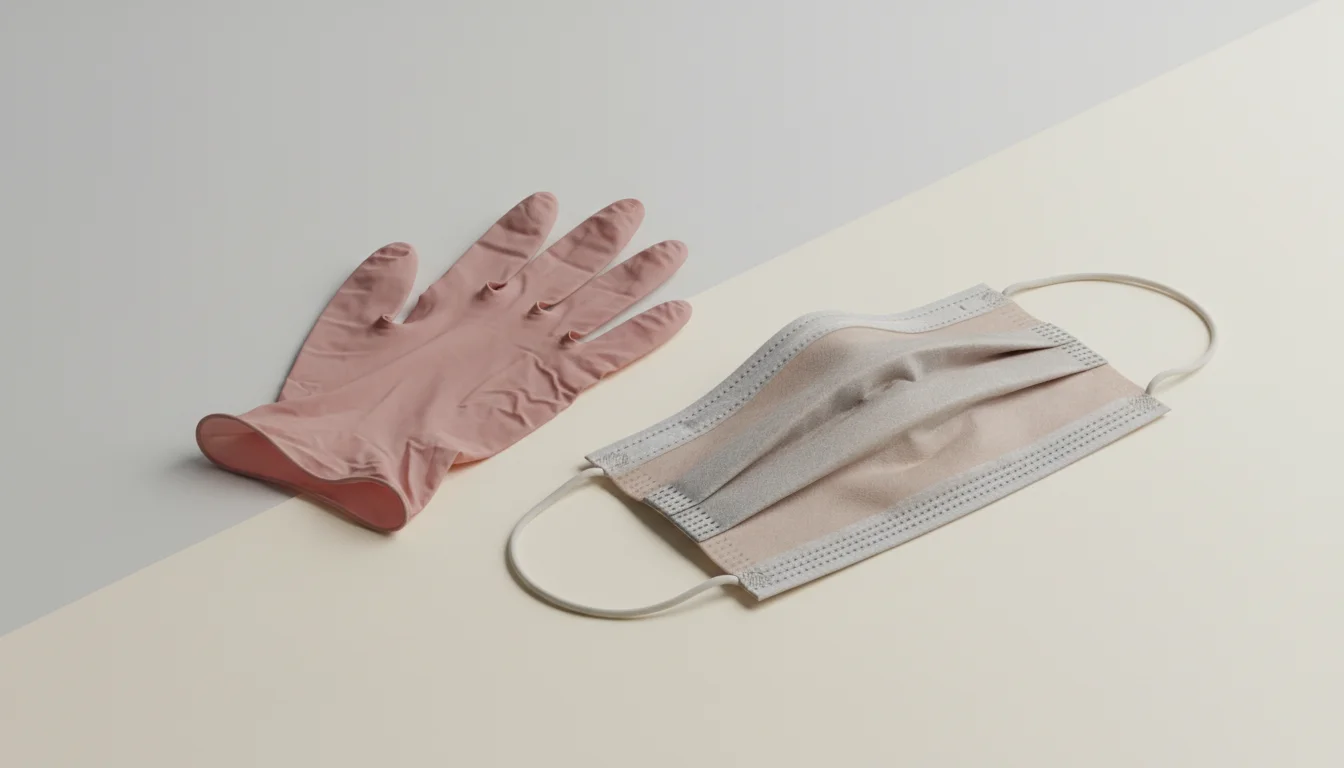
Gloves are easily the most critical piece of PPE you’ll use as an esthetician. They’re a simple physical barrier between your hands and the client’s skin that stops bacteria, viruses, and other nasty stuff from being transmitted. It’s a two-way street: the gloves protect your client from anything on your hands, and they protect you from contact with bodily fluids or any skin conditions you might encounter. What the glove is made of really matters, too. Latex gives you good feel, but since so many people have latex allergies, nitrile or vinyl are much safer bets. I personally prefer nitrile gloves because their superior puncture resistance and ability to stand up to various waxing products and cleansers give me one less thing to worry about during a busy day.
The rule for using gloves is simple, though it’s amazing how often it gets missed when things get hectic. You have to use a fresh pair for every single client. This is a basic requirement of sanitation. If a glove rips or gets contaminated mid-service, you have to stop, take it off immediately, re-sanitize your hands, and put on a new pair. Trying to power through with a torn glove (and I’ve seen it happen) is just asking for cross-contamination. The Centers for Disease Control and Prevention (CDC) is crystal clear on this: you never wash or disinfect gloves for reuse. They are designed to be single-use for a reason. Always put them on after washing or sanitizing your hands and be careful when you take them off so you don’t touch the contaminated outside, then throw them straight into the trash.
Respiratory Protection: Masks for a Safer Environment
Masks aren’t just for hospitals anymore. They’re an increasingly important part of our waxing safety gear, especially when there’s any chance of creating airborne particles or splashes. A mask’s main job in our treatment room is protecting both you and your client from breathing in each other’s respiratory droplets. When you’re doing certain services, like facial waxing or applying products quickly, you can definitely create fine splashes or even aerosols, and the mask is the physical barrier that stops them from being inhaled or getting into your nose and mouth.
Discover the smoothest way to stay hair-free
Expert waxing that leaves you smooth for weeks. Find a top-rated studio near you.
Find a Wax Center Near You →The kind of mask you wear really counts. A standard surgical mask is fine for blocking larger droplets, but if you need better filtration, you should be reaching for an N95 or KN95 respirator, which are made to filter out at least 95% of airborne particles. You don’t need an N95 for every single wax, but knowing when to use one is a mark of a true professional. For example, if your client is coughing or you’re going to be working very close to their face for a long time, grabbing a better mask is just smart. According to the Occupational Safety and Health Administration (OSHA), a proper fit is key for a mask to work, so just slapping one on isn’t enough. To actually be effective, it has to be worn correctly, with a good seal over both your nose and mouth.
Eye and Face Protection: Shielding Against Splashes
Your eyes are incredibly vulnerable to splashes from hot wax, cleansers, or anything else we use, and an accident can cause anything from simple irritation to chemical burns or worse. That’s why protective eyewear, like safety glasses or even a full face shield, should be part of your standard daily gear. Some people might think it’s overkill for a basic leg wax, but trust me, seeing hot wax splash into someone’s eye one time is all it takes to make you a believer. I saw a minor splash happen during a fast-paced brow wax once, and the client’s immediate pain and panic was a stark reminder of why I never skip eye protection.
When you pick safety glasses, make sure they have side shields for full protection, because splashes don’t always come from straight ahead. A face shield gives you even more coverage, which is great for services with a higher splash risk or if you have a client who tends to be a bit fidgety on the table. Whether you use reusable or disposable eyewear, the reusable kind must be properly cleaned and disinfected between every single client. Our commitment to hygiene has to include taking care of our reusable PPE, not just the service itself. If you’re looking for quality gear, the American National Standards Institute (ANSI) sets the standards for this kind of equipment, so you can check their ratings when you’re buying new glasses or shields.
Professional Attire and Barrier Protection
Your clothing is another part of your PPE, right alongside your gloves and mask. Clean, professional attire is the minimum, but throwing on a disposable apron or smock over your clothes for waxing services is a smart move. This outer layer catches all the stray wax and product drips, stopping them from getting on your clothes where they could be transferred to another client or surface. It’s an easy line of defense that you can just rip off and toss after each client, which really cuts down on the risk of cross-contamination.
Simple things like tying your hair back or using a headband are also part of your PPE, keeping hair from falling into your wax pot or onto a client, which is about preventing contamination, not just looking tidy. You also need to take off all your jewelry, especially rings and bracelets, before you start a service. Jewelry is a great place for bacteria to hide, and it can easily tear your gloves or even scratch a client. Going with minimal-to-no jewelry while you’re working is a key part of professional hygiene that a lot of people forget. In fact, many state licensing bodies, like the Georgia State Board of Cosmetology and Barbers, have very specific rules about dress code and hygiene that you’re legally required to know and follow.
Adherence to Regulations and Continuous Training
Hygiene and safety rules are constantly changing with new research and public health issues, so you can’t just learn them once and be done. Staying committed to proper esthetician PPE use means you have to keep up with ongoing education and follow the current regulations to the letter. Your local health department and state licensing board publish detailed rules for salons, and these are not optional suggestions, they are enforceable laws meant to protect the public. Claiming you didn’t know the rules won’t fly if an inspector shows up. It’s your personal responsibility as a licensed professional to review these guidelines regularly for any updates. Organizations like the NCEA (National Coalition of Estheticians, Manufacturers/Distributors & Associations) are great for finding resources and continuing ed to keep you up to speed on the latest in safety and sanitation.
Just following the rules isn’t enough. You need continuous training in infection control and how to use your PPE correctly through things like online courses or team workshops. When you really get the “why” behind each protocol, like knowing the difference between contact, droplet, and airborne transmission, you’ll make smarter decisions about when you might need more than just the basic level of protection. Taking safety this seriously protects both you and your clients, and it’s what builds the trust that keeps them coming back. A smarter, well-informed esthetician provides a safer experience for everyone who walks through the door. To dig deeper, you can read about why 2026 demands hygiene in waxing practices. Plus, understanding esthetician training scheduling secrets can help you fit that learning in. Make sure you know all 5 steps to client protection to really round out your safety knowledge for 2026.
Getting your PPE use right, every single time, is a non-negotiable part of being a professional esthetician that protects your clients and your own career.
Why do I have to use new gloves for every single client?
You need a fresh pair of disposable gloves for every client to stop the spread of bacteria and viruses. It’s the only way to keep your work area sterile and protect both of you from potential infection.
What kind of mask should I use for waxing?
A standard surgical mask is usually fine for blocking droplets. But if a service might create aerosols or splashes (like some facial waxing), you should upgrade to an N95 or KN95 respirator for much better filtration.
Do I really need to wear eye protection for waxing?
Yes, absolutely. Wearing safety glasses with side shields or a face shield is the best way to prevent hot wax or chemical cleansers from splashing into your eyes, which can cause serious irritation and injury.
Is a disposable apron or smock really necessary?
Yes, they provide a great barrier that keeps wax and product off your clothes. This prevents you from accidentally carrying contaminants from one client or surface to another, drastically cutting down on cross-contamination risk.
How often do I need to check for new hygiene rules?
You should be checking for updates from your local health department and professional groups regularly. Safety protocols change based on new science and public health advice, and it’s your job to stay current.


