 By Editorial Team
So many beauty businesses just get the atmosphere wrong, leaving clients in spaces that feel sterile, out of style, or plain unwelcoming. This mistake hits your client retention and new bookings hard because the physical environment is a huge part of the whole service experience. A smart salon interior design turns a merely functional room into a welcoming beauty space, building the kind of loyalty that gets people to book again and again.
Key Takeaways
- First, get a clear design concept that matches your brand and your target client. This will guide every choice you make.
- Spend good money on comfortable, ergonomic furniture and high-quality lighting because it makes a world of difference for both the client’s experience and your staff’s efficiency.
- Plan your layout strategically to create a smooth flow for clients and have obvious, separate areas for different services.
- Use sensory details like a signature (but subtle) scent and the right background music to pull the whole calming vibe together.
- Keep the space feeling fresh by regularly updating small decor items and being absolutely obsessive about cleanliness.
The Problem: Uninspired Spaces and Lost Opportunities
I’ve walked into countless beauty salons over the years, everywhere from busy downtown Atlanta to quiet suburbs, and I see the same thing over and over: places that do great work but completely ignore the power of their physical space. They’re hyper-focused on technical skill, which is obviously critical, but they forget how much the room itself shapes how a client feels. This is about psychology, not just looks. A drab waiting area, buzzing fluorescent lights, or a cluttered treatment room all scream a lack of attention to detail, which can make even a perfect waxing service feel… off. Clients might feel rushed or uncomfortable, and they won’t even know why. The problem is usually misdirected effort, all energy goes into the service, while the stage where it happens is left to crumble.
Think about the client’s path. They book a Brazilian or brow shaping, and their first real interaction with your brand isn’t the esthetician, it’s your front door, the reception desk, and the walk to the treatment room. If those first few moments are disappointing or, even worse, off-putting, you’re already starting from behind. That 2023 Statista survey wasn’t a surprise when it showed atmosphere and cleanliness rank almost as high as service quality for customer satisfaction in personal care. This is a foundational piece of your business. When a space feels unwelcoming, people just don’t come back, which kills your long-term revenue and word-of-mouth referrals. It’s a silent business killer that owners often blame on competition or pricing instead of looking at their own four walls.
What Went Wrong First: The Generic Approach
A lot of salon owners fall into the “generic solution” trap right at the start. They go for a minimalist, all-white look because it seems clean, or they try to jam too many services into one small room with no real separation. I’ve seen salons near Atlanta’s Perimeter Center, for example, that aimed for a sleek, expensive look but just ended up feeling cold because they forgot the warmth that comes from texture and smart lighting. Another classic mistake is going the DIY route without any real design plan. An owner might buy a chair they love and a desk they like, only to find the pieces look terrible together, creating a disjointed and awkward space. This confusion gets passed on to the client, who has no idea what your brand is supposed to be about. They might even blow their budget on expensive fixtures that don’t actually work for a busy salon, like a tiny reception desk that creates a bottleneck or waiting room chairs that are torture after five minutes. Without a real strategy, it’s just wasted money on a room that fails to do its main job: making clients feel comfortable and cared for.
Another common error is totally underestimating the small sensory stuff. I remember one salon where the smell of cleaning products and cheap air fresheners was so strong it hit you at the door, a terrible first impression. Then there are the places where the music is either blasting, barely audible, or just completely wrong for a relaxing service. Do clients really want to hear Top 40 radio during a facial? Probably not. These details add up, and when you ignore them, you miss the chance to create a complete, positive experience. The goal is a room that works hard for your business, quietly communicating professionalism and comfort from every corner.
The Solution: Crafting an Intentional, Welcoming Beauty Space
Fixing this means taking a deliberate, multi-layered approach that goes way beyond just making things look pretty. You have to think about function, comfort, and your brand. This is about understanding the core principles of an inviting, efficient space, not just chasing fleeting trends. You need to think of the salon as part of the service itself, a carefully built environment that makes every step of the client’s visit better.
1. Develop a Clear Design Concept and Brand Identity
Before you even think about a paint color, you have to define your salon’s identity. What do you want clients to feel? Serene and pampered? Energetic and modern? Cozy and boutique? This core idea should drive every single decision. For instance, a high-volume speed waxing salon might choose a minimalist, bright design that communicates efficiency, whereas a more spa-like place would use soft lighting, natural wood, and calm colors. I always tell owners to make a mood board, collect images, fabrics, and color swatches that capture the brand’s feeling. It’s the best way to keep everything consistent and avoid that “patchwork” look. The experts at the International Interior Design Association (IIDA) are right: successful commercial spaces always start with a strong story built around the client.
Discover the smoothest way to stay hair-free
Expert waxing that leaves you smooth for weeks. Find a top-rated studio near you.
Find a Wax Center Near You →2. Optimize Layout and Flow for Client Experience
Your salon’s layout *is* the client’s journey and it dictates how efficiently your staff can work. Map out the path from the front door to reception, the waiting area, the treatment room, and finally to checkout. Where are the bottlenecks? Is privacy protected where it needs to be? For a waxing salon, this means treatment rooms must be tucked away and as soundproofed as possible so clients never feel exposed.
A good layout has clear zones:
- Reception/Waiting Area: This is your first impression. You need comfortable chairs, clear directions, and a welcoming desk. Think about how people check in and out to prevent a traffic jam.
- Retail Area: If you sell aftercare products, set up a small, well-lit display that people can browse without feeling pressured.
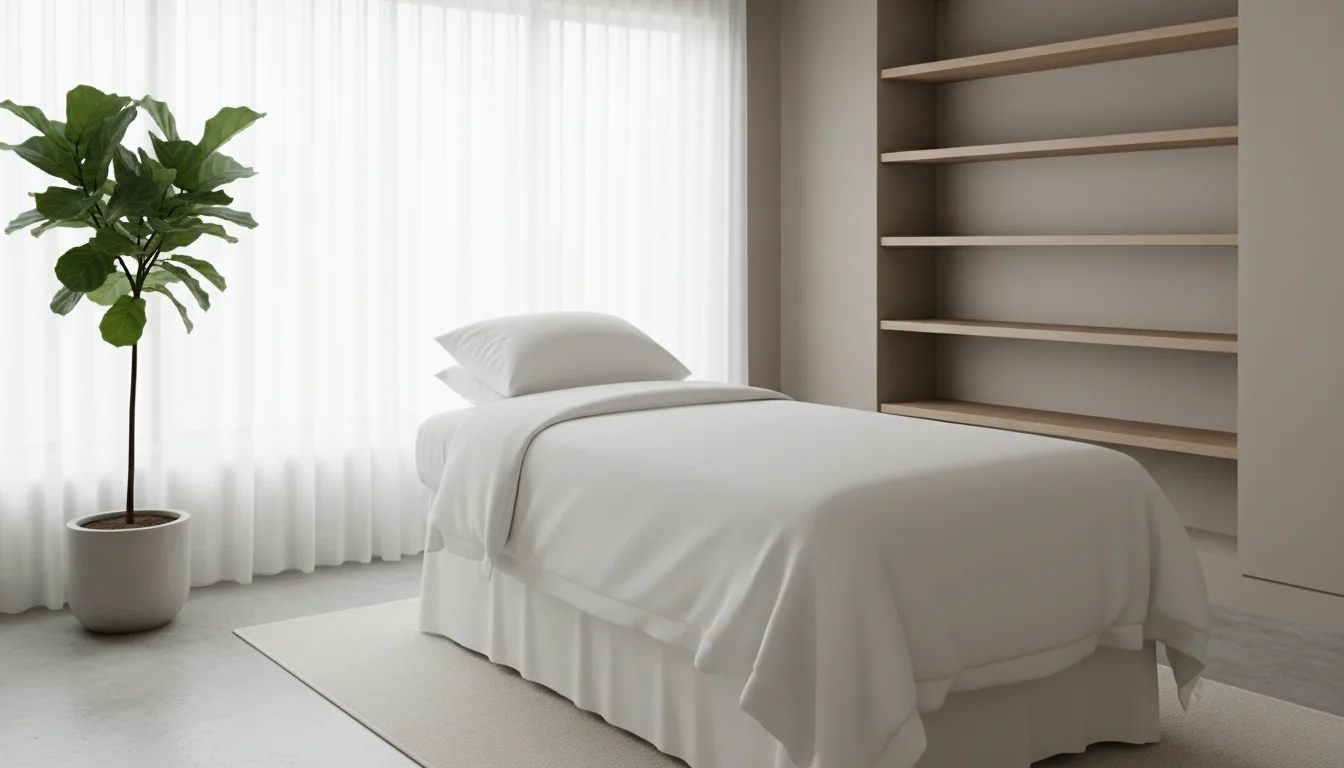
- Treatment Rooms: This is where the magic happens. The room needs enough space for the tech to move easily, good ventilation, and supplies within arm’s reach. Privacy is everything here.
- Restrooms: So often an afterthought, but a clean, well-stocked restroom tells clients you care about the details.
During a salon renovation I consulted on in Midtown Atlanta, we completely rearranged the reception desk and waiting area to create a more natural flow. This one change dramatically cut down on perceived wait times and made checking in feel effortless, proving how small layout tweaks can have a huge impact on that first impression.
3. Thoughtful Lighting Design
Don’t mess up the lighting. It’s one of the most powerful tools you have for setting a mood, making a space look clean, and even helping your technicians do a better job. Get rid of harsh overhead fluorescent lights. Instead, you need to layer your lighting:
- Ambient Lighting: This is your general, overall light. It should be soft and warm to create a welcoming feel.
- Task Lighting: This is bright, focused light for work areas like the reception desk and, most importantly, over the treatment bed for your technicians. Putting these on a dimmer in treatment rooms is a great touch for client comfort.
- Accent Lighting: Use this to show off cool architectural details, art, or your retail shelves. It adds depth and interest.
Natural light is gold, so use it wherever you can. If your space is dark, invest in high-quality LED bulbs that mimic natural daylight. The right lighting can make a tiny room feel bigger and a stark space feel warm. In my experience, a mix of warm LED downlights with some softer wall sconces in the waiting area is an instant recipe for calm.
4. Curated Color Palettes and Materials
Color is all about emotion. For beauty spaces, warm neutrals like soft grays, creams, and earthy greens are often a safe bet because they help people relax. You can still use bold colors, but save them for accents in your artwork or pillows. Your material choices matter just as much. Things like natural wood, stone, and plush fabrics add a sense of warmth and luxury. Of course, you need durable, easy-to-clean surfaces in high-traffic spots, but you have to balance that with softer textures in waiting areas and treatment rooms. For example, the reception desk could be a tough, sleek quartz, but the chairs next to it could be a rich, stain-resistant velvet. You’re always looking for that sweet spot between practicality and luxury. A study from the Color Marketing Group (a top association for color pros) confirms the psychological effect of color on how customers feel and act, making it a critical choice for any business.
5. Sensory Elements: Sound, Scent, and Touch
A great space is more than just what you see. It’s what you hear, smell, and feel.
- Sound: Put together a playlist of gentle background music that isn’t distracting. Think instrumental, ambient, or low-key jazz. No jarring pop music.
- Scent: This is a delicate one. A subtle diffuser with a natural essential oil like lavender or a light citrus can be very relaxing. Stay away from heavy, fake-smelling plugins that can be off-putting or trigger allergies. The goal is a scent so subtle you barely notice it’s there.
- Touch: Beyond the comfy chairs, think about the feel of a soft throw blanket in the waiting area, plush towels in the rooms, and smooth, clean countertops.
When you get all these things working together, you create an immersive experience that people remember. I helped a salon in the Buckhead Village area develop a custom essential oil blend for their space, and the positive feedback on the calming atmosphere was immediate.
6. Functional and Comfortable Furniture
Your furniture has two jobs: look good and feel good, for both your clients and your staff. In waiting areas, pick seating that’s actually comfortable for different people to sit in for a bit. In the treatment rooms, make sure your waxing beds are adjustable, sturdy, and easy to wipe down. Your technician’s stool should support good posture to prevent back pain. The best furniture is stylish *and* comfortable. And don’t forget storage. Good built-in cabinets are a lifesaver for keeping clutter out of sight, which makes the whole room feel more peaceful and helps you maintain the hygiene standards that clients are definitely paying attention to.
The Result: Enhanced Client Loyalty and Business Growth
So what’s the payoff for all this intentional design work? First, you’ll see a real jump in client satisfaction and loyalty. When clients feel truly comfortable and valued from the second they walk in, they’re so much more likely to become regulars. This means higher retention, which is way cheaper than constantly chasing new customers. A well-designed space becomes a memorable part of your brand that sets you apart from the competition. Clients remember the feeling of your space long after they’ve forgotten the small details of the service.
Second, a beautiful space is a marketing machine that works for you 24/7. A great-looking salon is practically made for Instagram. Clients love to post photos of a cool space, giving you authentic, free promotion. That visual pull attracts new people who are searching for a better experience, even for a routine service. On top of all that, a professional and inviting environment gives you the confidence to charge premium prices because clients perceive the value as being higher. The entire vibe improves your services, letting you position your business as a go-to destination in your area, whether you’re in Decatur or Alpharetta. Think of your space as an investment with clear, measurable returns on client experience and, in the end, your bottom line. For more on this, check out how to boost loyalty with membership value.
Bottom line: designing a welcoming beauty space is a direct investment in your brand’s future. When you thoughtfully design every detail, from the layout and lighting to the scent in the air, you turn a simple appointment into a memorable experience. That’s what builds real loyalty and makes your business grow.
How often should a salon update its interior design?
You might do a major renovation every 5 to 10 years, but you should plan for smaller refreshes every 2 or 3 years. Things like a new coat of paint, different throw pillows, or new artwork can keep the space from feeling dated. And constant deep cleaning and decluttering are essential to keep it looking sharp.
What are the most cost-effective ways to improve salon ambiance?
Some of the biggest bangs for your buck are changing your light bulbs to a warmer temperature, adding dimmer switches, and a fresh coat of paint in a calming color. Bringing in a few healthy, live plants makes a huge difference. You can also update cheap things like cushions and throws, or add a subtle essential oil diffuser. Sometimes just rearranging the furniture for a better flow costs nothing but changes everything.
How important is privacy in a waxing salon’s design?
It’s absolutely non-negotiable. Privacy is everything in a waxing salon. Your design has to make clients feel 100% secure. That means fully enclosed treatment rooms (with good soundproofing if you can), window coverings that no one can see through, and a floor plan that doesn’t create awkward sightlines into private areas. Building that trust is key to the entire experience.
Should a salon’s design reflect current trends?
It’s good to know what’s trending, but you should build your design around a timeless, comfortable foundation that reflects your brand. You don’t want to have to renovate every time a fad dies. Bring in trends with things that are easy and cheap to swap out, like accent pillows, artwork, or decor items, not with your expensive flooring or furniture.
What role does cleanliness play in salon interior design?
Cleanliness isn’t just a role. It’s the whole show. The most beautifully designed salon in the world is a failure if it’s dirty. Your design choices should actually make it easier to keep the place spotless, think durable, non-porous surfaces. A flawlessly clean environment shows professionalism and gives clients the confidence they need to trust you with their bodies.


