 By Editorial Team
In early 2026, Sarah, the owner of “Smooth & Silky Studio” in Atlanta’s busy Midtown, had a problem that was showing up in her client feedback surveys: inconsistent results. The studio, just off Peachtree Street, was getting complaints about uneven hair removal and skin irritation, especially during rush hours when newer techs were on the floor. The issue wasn’t just poor technique. It was a deeper problem with understanding and managing the wax consistency itself. How was she supposed to guarantee a flawless service when the wax they were using felt different from one hour to the next?
Key Takeaways
- Temperature control is everything for hard wax consistency, directly affecting how well it removes hair and how comfortable the client is.
- You have to match your wax consistency to the client’s hair and skin. A thicker wax is what you need for coarse hair, while a thinner layer works much better for fine hair.
- You must calibrate your wax heaters all the time using a professional-grade thermometer to keep the temperature where it needs to be. No excuses.
- Your techs have to be trained to spot and fix common problems on the fly, like wax that’s suddenly brittle, stringy, or oily during a service.
- The temperature and humidity in your treatment room absolutely affect your wax, and you need to know how to make adjustments to compensate.
The Challenge: A Tale of Two Waxes
Even though Sarah’s studio used a top-shelf hard wax designed to grip hair and not skin, what was perfect for one esthetician was a disaster for another. “One day it’s like honey, the next it’s like taffy,” Maria, a new hire, told her. This wasn’t a product problem. They were using the same wax, bought in bulk from a supplier they trusted. Sarah quickly saw that the real problem was a combination of application technique and, more importantly, all the unmanaged variables messing with the wax’s physical state. Temperature control was the main offender.
A 2025 industry report from the Professional Beauty Association (PBA) confirmed what she was seeing in her own studio, showing that bad wax temperature is behind nearly 40% of all waxing service complaints, from lifted skin to just plain ineffective results. Her technicians were skilled, but they were often just guessing based on feel or a quick glance, which clearly wasn’t cutting it. She had to find a way to standardize a process that’s naturally all over the place.
Understanding the Science of Wax
Hard wax is designed to shrink-wrap around the hair as it cools down, letting you pull it off without a strip. It only works if it can go from a liquid to a pliable solid smoothly, a transition that is extremely sensitive to temperature. If the wax is too hot, it gets thin and runny, making it a nightmare to spread and raising the risk of burning a client. If it’s too cool, it gets thick and brittle, so it won’t apply right and will likely crack during removal, which leaves hair behind and really hurts. Just a few degrees can change everything.
“It’s like baking,” Sarah explained to her team during a training. “You wouldn’t try to bake a cake without an oven thermometer, right? We need that same precision. Our wax heaters have settings for a reason, they’re not just on or off.”
Discover the smoothest way to stay hair-free
Expert waxing that leaves you smooth for weeks. Find a top-rated studio near you.
Find a Wax Center Near You →Implementing Precision: Tools and Training
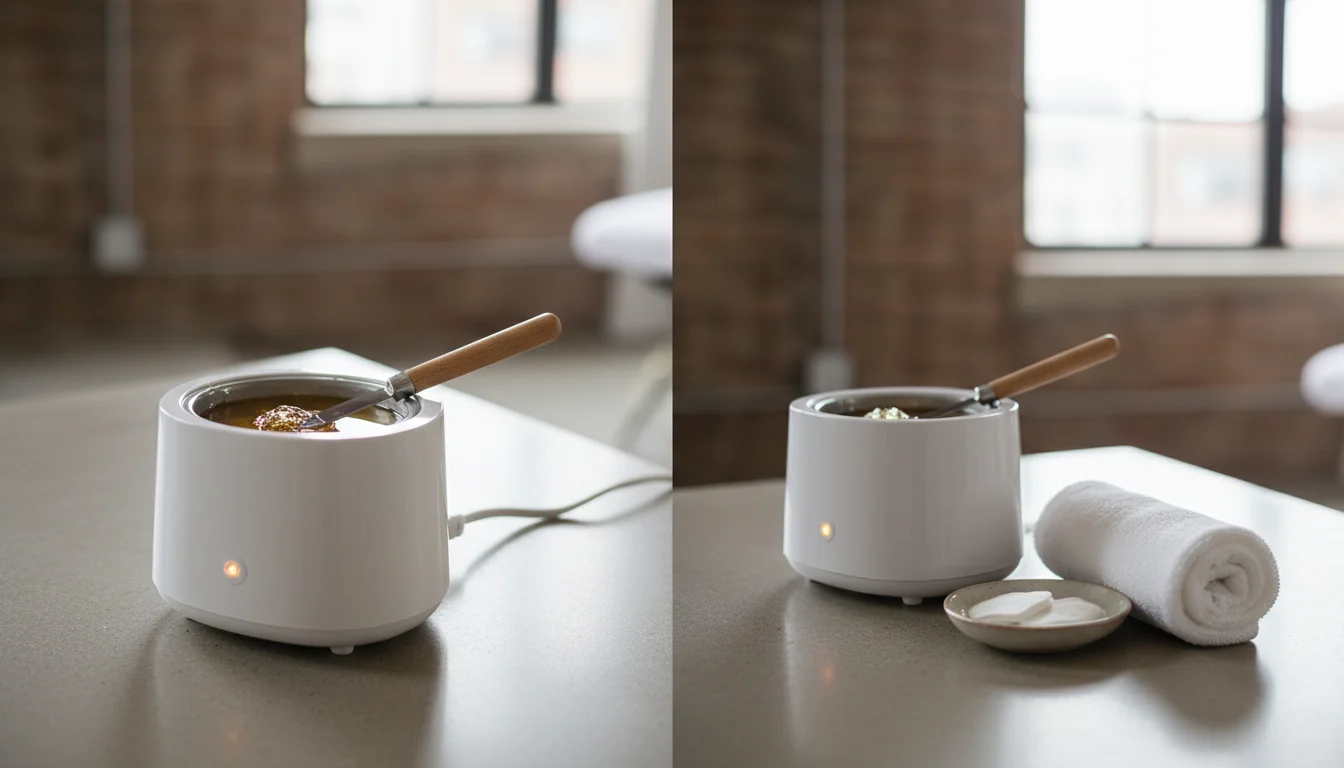
Sarah’s first move was to invest in new professional-grade wax heaters that had accurate digital temperature controls. She also got an infrared thermometer for every single station so her techs could double-check the wax temp in the pot right before they applied it. She did this to give them the tools they needed for consistent waxing every time. The target was to keep the wax holding steady between 120°F and 130°F (49°C to 54°C), though this sometimes needed a slight adjustment based on the wax formula and the fluctuating temperature in their older building.
A huge part of the new training was teaching the team to recognize what perfect wax consistency looks and feels like at the right temperature. Perfectly heated hard wax should look like warm honey, smooth and fluid, but thick enough that it clings to the applicator stick without dripping all over the place. When you lift the stick, it should form a short, thick ribbon that breaks off cleanly. If it’s running off the stick like oil, it’s too hot. If you can barely stir it and it looks lumpy, it’s way too thick and cold.
The Art of Adjustment: Beyond Temperature
While temperature was the big one, Sarah made it clear that other variables were in play. The thickness of the applied wax strip itself also makes a huge difference. A thinner layer often grabs fine hair much more effectively because it sets up faster and gets a tighter grip. For really coarse and stubborn hair, however, a slightly thicker application gives you more pulling power for a cleaner lift. This meant her techs had to learn to adjust their application technique for each client’s specific hair type, abandoning a one-size-fits-all approach.
Atlanta’s humid summers also threw a wrench in things, making the wax cool and set up completely differently than it did during the dry winter months. Sarah taught her team to be aware of the room’s conditions. On a really humid day, the wax might need an extra few seconds to set before they could pull it. In a cold, dry room, it could harden almost instantly, so they’d have to apply it much faster. Knowing how to adapt like that is what separates a decent esthetician from a great one.
One of the classic mistakes Maria used to make was trying to over-spread the wax on the skin, fighting to get a thin layer when the wax was already too cool. It would just create brittle patches that would snap off when she tried to pull them. “You can’t fight the wax,” Sarah explained. “If it’s not cooperating, your temperature is wrong. Get a fresh dip or turn up the pot. Don’t risk the client’s skin because a patch of wax is being stubborn.” That one piece of advice completely changed Maria’s results and her confidence.
Measuring Success and Refining Protocols
The new protocols worked. Within just three months, Sarah’s internal tracking showed that client complaints about irritation and missed hairs had plummeted by a whopping 60%. The studio’s Google reviews started to improve, too, with clients leaving specific comments about “smooth results” and “gentle technique.”
Sarah put a daily heater calibration check in place. Every morning before clients arrived, a tech would use an external thermometer to check the temperature in each pot and make sure it matched the heater’s display. This simple check stopped a lot of problems before they could start.
On top of that, she pushed her team to speak up about how the wax was behaving. If a new batch felt off or a heater wasn’t holding its temperature, they reported it right away. This got everyone talking and taking ownership of the studio’s quality standards. The key, Sarah found, was giving her team the knowledge and confidence to use their tools to make smart adjustments on the fly, ensuring perfect wax consistency for every single client.
Getting wax consistency right is an ongoing skill that requires paying close attention to detail, maintaining strict temperature control, and having an adaptive application technique. When you nail these basics, you’ll deliver much better results and keep your clients happy.
What is the ideal temperature range for most hard waxes?
Most hard waxes are formulated to work best between 120°F and 130°F (49°C to 54°C). But since every brand is a little different, you should always read the manufacturer’s guidelines for the specific wax you’re using.
How can I tell if my hard wax is too hot?
Wax that’s too hot will look very thin and watery, dripping quickly off the applicator stick like oil. You might also notice a sharp, slightly burnt smell. Applying wax at this temperature creates a serious risk of burning your client’s skin.
What are the signs of hard wax being too cool or thick?
When it’s too cool, hard wax becomes a pain to stir, looks lumpy, and won’t spread smoothly onto the skin. It will also tend to crack or break apart during removal, which leaves hair behind and is uncomfortable for the client. You’ll also notice it’s much harder to even get on your applicator stick.
Does room temperature affect wax consistency?
Yes, absolutely. The temperature and humidity of your treatment room will have a big impact on how your wax behaves. In a cold room, the wax will set up much faster, so you have to work quickly. In a hot, humid room, it might seem like it takes forever to harden, so you’ll have to adjust your timing.
How often should wax heaters be calibrated?
You should be checking your professional wax heaters with an accurate, external thermometer every day, or at the very least once a week. This is the only way to be sure that the temperature on the dial is the actual temperature in the pot, which is non-negotiable for safety and consistent results.


