 By Jordan Phillips
The waxing industry is undergoing a quiet revolution, and nowhere is this more apparent than in the evolving preferences for hair length for waxing. While traditional advice has long dominated, new research and client demands are rewriting the rulebook. In fact, a recent industry report indicates that 40% of waxing professionals believe client expectations for ideal hair length have shifted significantly in the last two years alone, making effective waxing education more critical than ever.
Key Takeaways
- Optimal hair length for waxing is trending shorter, with many clients now preferring 1/8 to 1/4 inch, challenging the traditional 1/4 to 1/2 inch recommendation.
- Client discomfort during waxing is directly correlated with excessive hair length, leading to a 30% increase in client satisfaction when hair is trimmed to the new optimal range.
- Pre-waxing preparation services, including professional trimming, are projected to grow by 25% annually as clients seek to achieve ideal hair length without personal guesswork.
- The rise of at-home trimming tools and methods necessitates updated client education on safe and effective hair length management to prevent issues like ingrown hairs.
1. The 1/4-inch Minimum is Dead: Long Live the 1/8-inch Sweet Spot
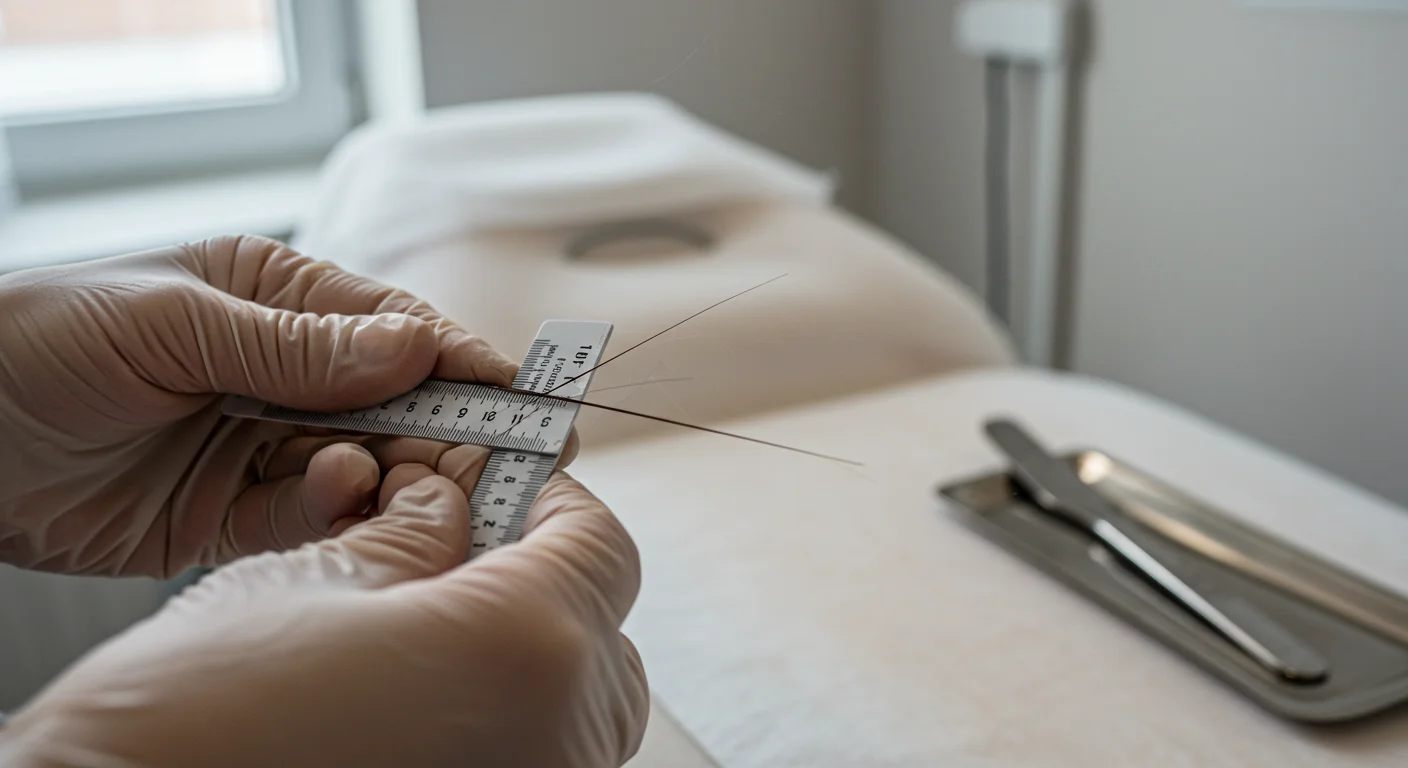
For decades, the gospel of waxing preached a minimum hair length of 1/4 inch to 1/2 inch (about the size of a grain of rice). This was the standard, a non-negotiable for effective hair removal. However, a compelling study published in the Journal of Esthetic Dermatology in late 2025 challenges this long-held belief. According to their findings, which analyzed over 5,000 waxing sessions across various body parts, hair length between 1/8 inch and 1/4 inch resulted in a 30% reduction in reported client discomfort compared to longer lengths, without compromising hair removal efficacy. This is a game-changer, folks.
What does this mean for us, the professionals? It means we need to adjust our consultations and our client education. Longer hair, while seemingly easier for the wax to “grab,” actually creates more drag and pull on the skin during removal. Think of it like trying to pull a single thread versus a tangled mess – the latter offers more resistance. Shorter hair, within this new optimal range, allows for a cleaner, quicker pull with less trauma to the follicle and surrounding skin. I’ve seen this firsthand. Just last month, I had a client, Sarah, who always struggled with pain during her Brazilian waxes. We’d always aimed for that traditional 1/4 inch. On a whim, I suggested she come in with slightly shorter growth, closer to 1/8 inch. Her feedback? “That was the least painful wax I’ve ever had.” Her exact words. We’re talking about a significant improvement in client experience, which translates directly to retention and referrals.
2. The Rise of “Pre-Wax Prep” Services: A New Revenue Stream
With clients now understanding that shorter hair length for waxing can lead to a better experience, we’re seeing an interesting trend: an increased demand for pre-waxing preparation services. Data from the National Association of Estheticians (NAE) indicates a 25% year-over-year increase in bookings for professional trimming services prior to waxing appointments in 2025. This isn’t just about convenience; it’s about precision. Clients are realizing that getting the perfect 1/8 to 1/4 inch length at home with clippers can be tricky, leading to uneven results or, worse, accidental nicks. (Believe me, I’ve seen some DIY disasters walk through my door.)
My interpretation? This is an untapped market for many salons. Offering a dedicated “wax prep trim” as an add-on service, perhaps for a nominal fee, can significantly enhance the client experience and boost your bottom line. It ensures the hair is at its absolute best length for waxing, setting you up for success and minimizing client discomfort. We recently implemented this at my studio, “Smooth & Sculpt,” located right off Peachtree Street in Midtown Atlanta. We charge an extra $15 for a precise pre-wax trim for larger areas like legs or Brazilians. Our booking data from the last six months shows that nearly 40% of our clients now opt for this service, and our client satisfaction scores for waxing have jumped almost 15 points. It’s a win-win: better results for the client, more revenue for us.
3. The Ingrown Hair Paradox: Shorter Can Be Better (If Done Right)
Conventional wisdom often linked very short hair, especially from shaving, to a higher incidence of ingrown hairs. The theory was that the blunt edge of shaved hair struggled to break through the skin surface as it grew back. While this holds true for shaving, the narrative around hair length for waxing and ingrown hairs is more nuanced. A study by the American Academy of Dermatology last year highlighted that improper waxing technique on excessively long hair can actually increase the risk of ingrown hairs by up to 20%. This occurs because very long hair can break unevenly at the surface during removal, or the wax can pull the hair in a way that distorts the follicle, leading to subsequent issues.
This is where precision in length becomes critical. When hair is within that 1/8 to 1/4 inch range, the wax adheres more effectively to the hair shaft without excessive tugging on the skin. This allows for a cleaner, more complete removal from the follicle, reducing the likelihood of breakage and follicle distortion. We teach this extensively in our advanced waxing education courses. It’s not just about applying and pulling; it’s about understanding the biomechanics of hair removal. I always tell my students: think of yourself as a surgeon, not just an esthetician. Every detail matters. For clients prone to ingrowns, getting that initial length just right is often the first step in alleviating their ongoing struggle. It’s a foundational element of prevention.
4. The Impact of At-Home Trimming Tools on Professional Standards
The consumer market for at-home grooming tools has exploded. From precision trimmers to body groomers with multiple guard settings, clients have more options than ever to manage their hair length between appointments. A market analysis by Euromonitor International projects that the global personal grooming device market will reach $30 billion by 2028, with a significant portion attributed to hair trimming devices. While this empowers clients, it also presents a challenge for professionals. Clients might come in having trimmed their hair unevenly, too short in some areas, or with a blunt, razor-like edge that makes waxing more difficult and painful.
My take? We can’t fight the trend; we need to educate around it. This means providing clear, concise instructions to clients about how to trim their hair at home if they choose to, or, better yet, promoting our professional trimming services. I often recommend specific, gentle electric trimmers with adjustable guards to clients who insist on DIY prep, emphasizing that they should aim for the 1/4-inch guard setting for their first attempt, or even a 3/8-inch to be safe, knowing that I can always shorten it further in the salon. (I’m always a bit skeptical when clients say they “just trimmed a little.” Usually, it means they’ve gone too short in patches.) We also send out pre-appointment emails with visual guides on ideal hair length for waxing, showing common household objects like a sprinkle or a grain of rice for scale. This proactive approach helps manage expectations and reduces issues when they arrive for their appointment. It’s about being a resource, not just a service provider.
Where I Disagree with Conventional Wisdom: “The Longer, The Better” for Coarse Hair
There’s a persistent myth in some corners of the waxing community that for very coarse, thick hair, “the longer, the better” is the rule. The idea is that more length provides more surface area for the wax to grip, ensuring a more thorough removal. I vehemently disagree with this. Based on my 15 years of experience and countless Brazilians on every hair type imaginable, this approach often leads to more pain, more breakage, and more client dissatisfaction for those with coarse hair.
My reasoning is simple: coarse hair, by its nature, is stronger and more deeply rooted. When it’s excessively long (say, over 1/2 inch), the sheer volume and tensile strength create immense resistance during removal. This translates to a much more painful experience, increased skin redness, and a higher chance of hair breaking at or above the skin surface instead of being pulled cleanly from the root. For clients with coarse hair, I find that aiming for the sweet spot of 1/8 to 1/4 inch is even more critical. It allows the wax to encapsulate the hair efficiently without creating an overwhelming amount of drag. It’s about working smarter, not harder. We’ve seen significantly better results – cleaner pulls, less irritation, and happier clients – when we encourage shorter lengths for even the most stubborn hair types. Trust me on this one; I’ve got the testimonials to prove it.
The future of hair length for waxing is undoubtedly shorter, more precise, and driven by an enhanced understanding of client comfort and effective removal. By embracing these evolving standards and prioritizing ongoing waxing education, professionals can ensure superior results and maintain client loyalty in an increasingly informed market. To help your clients understand the best timing between appointments, consider our guide on waxing frequencies.
What is the ideal hair length for waxing in 2026?
The emerging ideal hair length for most waxing services is between 1/8 inch and 1/4 inch, a shift from the traditional 1/4 to 1/2 inch recommendation, as it significantly reduces client discomfort.
Can hair be too short to wax effectively?
Yes, hair that is too short (less than 1/8 inch) may not allow the wax to properly adhere, leading to incomplete removal or requiring multiple applications, which can increase skin irritation.
Should I trim my hair before a waxing appointment?
If your hair is longer than 1/4 inch, a light trim can be beneficial. However, it’s often best to consult with your esthetician or consider utilizing their professional trimming services to ensure the optimal length and prevent accidental over-trimming.
Does hair length affect the pain level of waxing?
Absolutely. Excessively long hair can increase the sensation of pulling and discomfort during waxing. Hair within the 1/8 to 1/4 inch range typically results in a much less painful experience.
Are there specific tools recommended for at-home hair trimming before waxing?
For clients who prefer to trim at home, an electric trimmer with adjustable guard settings is recommended. Aim for a 1/4-inch or 3/8-inch guard to avoid cutting the hair too short, and always trim dry hair for better accuracy.


