 By Editorial Team
The precise hair length for waxing is not just a preference; it’s a critical factor that dictates everything from client comfort to the longevity of results, and in 2026, understanding this nuance matters more than ever for professional waxing services. Why is this seemingly small detail becoming such a make-or-break aspect of the client experience?
Key Takeaways
- Optimal hair length for waxing is consistently between 1/4 and 1/2 inch (0.6 to 1.25 cm) for most body areas, ensuring maximum grip and minimal discomfort.
- Educating clients on proper pre-waxing hair growth is essential to prevent common issues like hair breakage, patchy results, and unnecessary pain.
- Professional studios should implement clear communication strategies, including pre-appointment reminders and in-studio consultations, to manage client expectations regarding hair length.
- Using high-quality hard wax formulations is more forgiving with slightly shorter hair but still benefits significantly from the recommended 1/4 inch minimum.
- Consistent aftercare product recommendations and follow-up advice reinforce the importance of hair growth cycles for successful subsequent waxing appointments.
I remember a frantic call I received just last month from Sarah, owner of “Smooth & Serene,” a boutique professional waxing studio nestled in the heart of Atlanta’s bustling Buckhead district, near the intersection of Peachtree Road and Lenox Road. Sarah sounded genuinely distressed. Her studio, known for its impeccable service and loyal clientele, was suddenly facing a rash of client complaints. “My clients are saying their waxes aren’t lasting,” she explained, her voice tight with worry. “Or worse, they’re experiencing more pain than usual, and some are even getting patchy results. I’m using the same premium hard wax, my estheticians are all highly trained, what gives?”
I’ve been in the waxing education business for over fifteen years, consulting with studios from Decatur to Sandy Springs, and Sarah’s problem immediately rang a bell. “Sarah,” I asked, “have you noticed anything different about the hair length your clients are coming in with?” There was a pause. “Well, now that you mention it,” she replied, “a few estheticians have commented that some clients are showing up with hair that’s barely there, or conversely, practically ready for a braid.”
Bingo. This wasn’t a product issue, nor a training deficit. This was a classic case of what I call the “Goldilocks Effect” in waxing: the hair has to be just right. The optimal hair length for waxing is typically between 1/4 inch and 1/2 inch (0.6 to 1.25 cm). Any shorter, and the wax struggles to grip the hair follicle effectively. Any longer, and the wax can become tangled, making removal more painful and increasing the risk of hair breakage rather than clean extraction from the root.
The Science Behind the Ideal Length
To truly understand why this range is non-negotiable, we need to talk a little about how waxing actually works. Professional waxing, especially with modern hard wax formulations, relies on the wax encapsulating the hair. When the hair is too short, the wax can’t get a sufficient hold. It glides over the hair or only grips the very tip, leading to breakage at the skin’s surface. Think of it like trying to grab a tiny splinter with blunt tweezers; it’s just not going to work efficiently. A 2024 study published in the Journal of the American Academy of Dermatology, while focusing on laser hair removal efficacy, indirectly highlighted the importance of hair follicle integrity for any depilation method, emphasizing that methods causing breakage often lead to faster regrowth and skin irritation.
Conversely, when hair is too long, the wax can become too difficult to apply evenly. It can tug at the hair before the strip is even pulled, causing unnecessary discomfort. More critically, long hair can get matted in the wax, making the removal process less clean and more prone to breakage. This results in those dreaded patchy areas Sarah was hearing about, and a client experience that feels more like torture than pampering. I had a client last year, a gentleman preparing for a bodybuilding competition, who arrived for a full-body wax with hair that could only be described as a small forest. We spent an extra 30 minutes carefully trimming before we could even begin waxing. It was a learning experience for both of us.
Sarah’s Studio: A Case Study in Hair Length Management
Back to Sarah. We developed a three-pronged strategy for Smooth & Serene. First, we revamped their pre-appointment communication. Instead of a generic reminder, clients now received a text and email 48 hours before their appointment with a clear, concise instruction: “For your most comfortable and effective wax, please ensure your hair is at least 1/4 inch long (about the length of a grain of rice) and no longer than 1/2 inch. If it’s longer, a quick trim before your appointment will help!” This wasn’t just a suggestion; it was framed as essential for optimal results.
Smooth skin that lasts, the easy way
Expert waxing that leaves you smooth for weeks. Find a top-rated studio near you.
Find a Wax Center Near You →Second, we empowered her estheticians with a brief, standardized script for clients whose hair length wasn’t ideal. “I understand you’re eager for a smooth finish,” the script began, “but for the best results and your comfort today, your hair is either a little too short for the wax to grip properly, or a bit too long, which can make the process more uncomfortable and prone to breakage. We can proceed, but please know the results might not be as flawless or long-lasting as you’d typically experience. Alternatively, we can reschedule for a time when your hair is at the optimal length, or for longer hair, we can trim it here for a small fee.” This approach, while sometimes leading to rescheduling, drastically reduced client dissatisfaction because expectations were managed upfront.
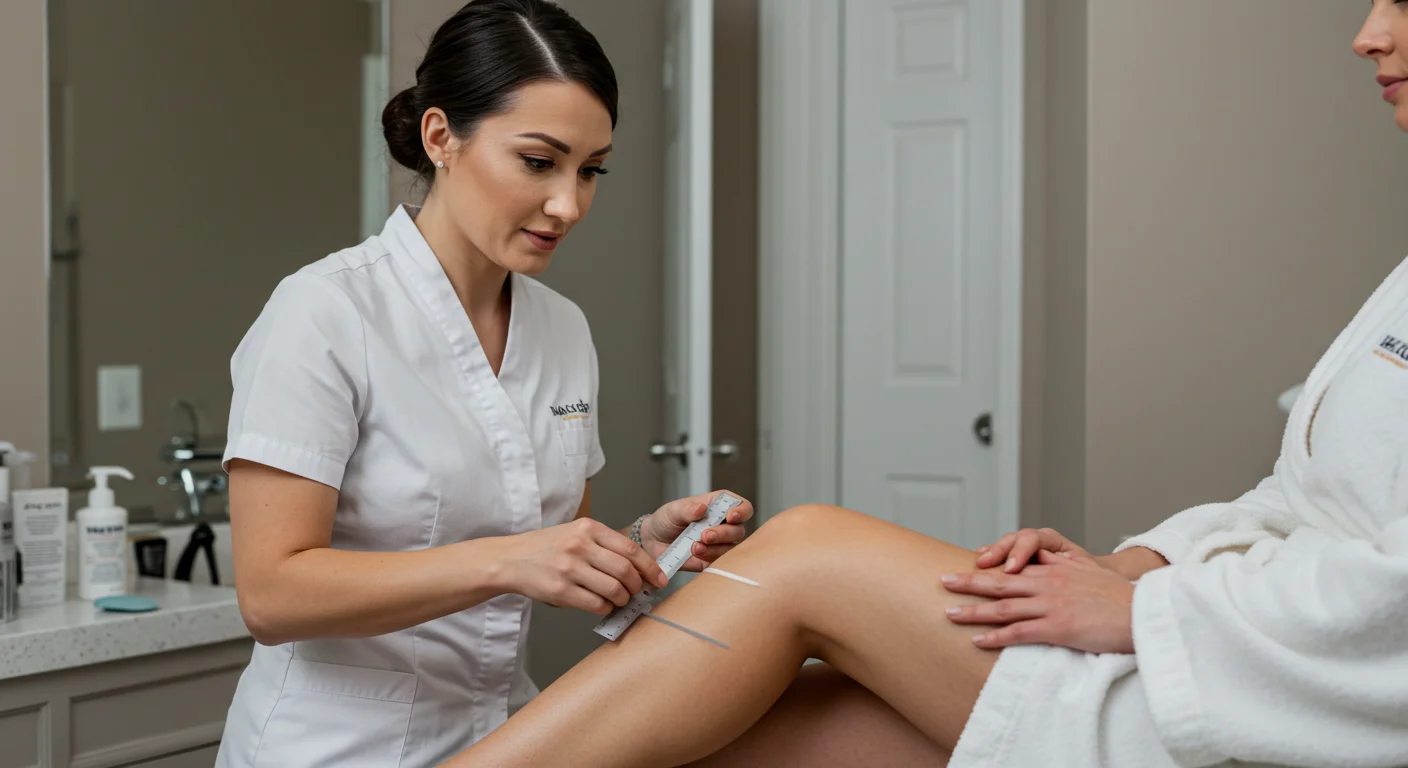
Third, we introduced a visual aid. In each waxing room at Smooth & Serene, a small, laminated card now sits on the vanity, displaying actual hair strands of 1/4 inch and 1/2 inch next to a ruler, alongside a graphic demonstrating the hair growth cycle. This subtle educational tool helps demystify the process and reinforce the importance of proper hair growth.
The results were almost immediate. Within two weeks, Sarah reported a significant drop in complaints. “My estheticians say clients are actually coming in with better hair growth now,” she shared excitedly. “And when they don’t, the conversation is much easier. We’re seeing fewer re-dos and happier clients overall.” This isn’t just about avoiding problems; it’s about elevating the entire professional waxing experience. When the hair is the right length, the wax adheres perfectly, leading to a cleaner pull, less pain, and a smoother, longer-lasting result. This directly translates to client retention and positive word-of-mouth referrals.
The Role of Wax Type and Technique
It’s important to acknowledge that not all waxes are created equal, and some are more forgiving than others. Hard wax, for example, which I almost exclusively recommend for sensitive areas and for clients with coarser hair, encases the hair as it hardens, lifting it away from the skin. This makes it particularly effective for removing shorter hairs, perhaps down to 1/8 inch for experienced professionals using high-quality formulations. However, even with the best hard wax, pushing the limits below 1/4 inch increases the risk of breakage and skin irritation. The National Coalition of Estheticians, Manufacturers/Distributors & Associations (NCEA) consistently emphasizes proper technique and product selection as fundamental to client safety and satisfaction.
Soft wax, on the other hand, which is removed with a strip, requires a slightly longer hair length to ensure adequate adhesion. If the hair is too short, the wax might not grip enough to lift it from the root, leading to surface breakage. If it’s too long, it can be messier and more painful to remove. My opinion is firm: for soft wax, stick to the 1/4 to 1/2 inch rule without exception. There’s no room for error here if you want truly clean results.
Beyond the wax itself, the esthetician’s technique is paramount. A skilled professional understands how to assess hair growth patterns, skin sensitivity, and even the direction of hair growth to achieve the best results. But even the most experienced esthetician can’t work magic on hair that’s either too short or too long. It’s like trying to paint a masterpiece with a brush that’s too dry or too overloaded; the tools and canvas must be prepared correctly.
Client Education: The Unsung Hero of Waxing Success
The biggest challenge, as Sarah discovered, often lies in client education. Many clients simply don’t know the optimal hair length, or they forget between appointments. This is where studios must take proactive steps. Beyond pre-appointment reminders, I strongly advise having a dedicated section on the studio’s website detailing pre- and post-waxing care, including specific guidance on hair length. A clear, easy-to-understand infographic can be incredibly effective. Consider a “first-time client” email series that walks them through the entire process, setting expectations from the start.
We also need to address the common misconception that “the shorter, the better.” Clients often trim their hair excessively before an appointment, thinking they are being helpful. This is precisely why visual aids and clear, non-judgmental explanations are so important. We need to frame this information not as a criticism, but as a commitment to their comfort and the quality of their results.
Another often-overlooked aspect is the impact of hair growth cycles. Hair grows in phases (anagen, catagen, telogen). For a truly smooth and lasting wax, you want to catch as many hairs as possible in their active growth (anagen) phase. This usually means allowing a consistent growth period, typically 3-4 weeks, between waxes. If a client shaves or uses depilatories between waxes, they disrupt this cycle, and the hair will be at varying lengths, leading to less effective removal during their next waxing appointment. This is why consistent messaging around avoiding shaving between waxes is just as important as advising on initial hair length.
In 2026, with the sheer volume of information (and misinformation) available online, professional studios have an even greater responsibility to be the authoritative source for their clients. Providing accurate, easy-to-digest information about hair length for waxing isn’t just good customer service; it’s a fundamental pillar of professional integrity and business success. It directly impacts client satisfaction, reduces operational inefficiencies, and ultimately, strengthens the studio’s reputation. Don’t underestimate it.
Understanding and communicating the ideal hair length for waxing is not merely a detail; it is the cornerstone of a successful, comfortable, and long-lasting professional waxing experience. By prioritizing client education and maintaining clear communication, studios can ensure optimal results and foster enduring client loyalty.
What is the absolute minimum hair length required for professional waxing?
While 1/4 inch (0.6 cm) is generally recommended for optimal results, some advanced hard wax formulations and skilled estheticians can effectively remove hair as short as 1/8 inch (0.3 cm) in certain areas, though this increases the risk of breakage and discomfort.
Can hair be too long for waxing?
Yes, hair can definitely be too long. When hair exceeds 1/2 inch (1.25 cm), it can become tangled in the wax, making application difficult, removal more painful, and increasing the likelihood of hair breakage rather than clean extraction from the root. It may also require trimming before the wax service.
Why does hair length impact the pain level during waxing?
Proper hair length ensures the wax can grip the hair efficiently without tugging at the skin prematurely. Hair that’s too short won’t adhere properly, leading to multiple pulls or incomplete removal. Hair that’s too long can get tangled and pull before the strip is removed, both scenarios leading to increased discomfort and potential skin irritation.
What happens if I shave between waxing appointments?
Shaving between waxing appointments disrupts the natural hair growth cycle. This means that when you return for your next wax, hairs will be at different growth stages and lengths, leading to less effective removal, patchiness, and potentially requiring more frequent waxing to achieve desired smoothness.
How can I accurately measure my hair length before a waxing appointment?
You can use a small ruler to measure your hair, aiming for about the length of a grain of rice (1/4 inch) up to half an inch. If your hair is significantly longer, a gentle trim with scissors (being very careful not to cut yourself or trim too short) can help, but always err on the side of slightly longer rather than too short.
“As average temperatures rise – mainly due to the burning of fossil fuels around the world – hot weather becomes much more likely and more intense.”


