 By Editorial Team
If you’re in the business of personal services, you’re not just dealing with clients, you’re dealing with a maze of health and safety rules. For professional waxing, that commitment to regulatory compliance is everything. It’s how you make sure the entire client experience, from the sanitation of your room to the training of your staff, is top-notch. Following the strictest waxing safety standards is what separates a good studio from a great one, earning client trust and getting people the results they came for.
Key Takeaways
- To keep clients and staff safe, waxing studios have to follow federal OSHA guidelines, their state’s cosmetology board regulations, and local health department rules.
- There’s no room for negotiation on sterilization and disinfection. That means using EPA-registered disinfectants correctly and never, ever reusing single-use items, all to stop cross-contamination in its tracks.
- A technician’s license is just the start. Ongoing education and deep training in waxing methods, skin anatomy, and how to handle emergencies are what maintain high safety standards.
- Client intake forms are your first line of defense for spotting contraindications and customizing a service, while clear aftercare instructions prevent problems after the client leaves.
- Regular internal audits and surprise inspections from state boards are how you verify that you’re actually following all the rules, ensuring your operations are solid and your clients are protected.
The Foundation of Safety: Federal, State, and Local Mandates
The rules for waxing come from three different levels: federal, state, and local, and they’re all there to protect everyone involved. Federally, the Occupational Safety and Health Administration (OSHA) sets the rules for workplace safety, which includes bloodborne pathogens training and communicating about hazardous materials. So, every pro waxing studio needs a clear plan for what to do with any bodily fluids and how to get rid of contaminated materials like used wax strips, a detail that sketchy operations often ignore.
Your state’s cosmetology board is probably the most powerful regulator you’ll deal with. Each state has its own laws and rules that control everything from how your facility gets licensed to what qualifications your practitioners need. In Georgia, for instance, the Georgia Board of Cosmetology and Barbers has detailed requirements for salon sanitation, sterilizing equipment, and what a licensed esthetician is legally allowed to do. These aren’t just suggestions. They’re laws. Break them and you’re looking at fines or even losing your license. Following these state-specific codes is what makes you a legitimate, safe operation instead of a liability. On top of that, local health departments add their own rules and often show up for unannounced inspections to check on hygiene, waste disposal, and how the building is maintained.
Let’s get specific about sterilizing tools. Many states mandate that you use a hospital-grade, EPA-registered disinfectant on any non-porous tools (like metal tweezers). Anything porous? It has to be single-use. This is about wiping out the risk of spreading infections, from a simple skin rash to something much worse. Any studio that cuts corners here is putting its clients at a risk they should never have to take.
Sterilization and Hygiene Protocols: Non-Negotiable Standards
Uncompromising sterilization and hygiene are the foundation of waxing safety. In any service where you’re touching skin, cross-contamination is a real and present danger, so professional studios must have strict measures to stop it. It all starts with the wax pot. Any reputable studio has a strict “no double-dipping” rule, which means that a stick that has touched a client’s skin is thrown away immediately and never goes back into the wax. It sounds simple, but this one action is absolutely essential for preventing the spread of bacteria and other pathogens from one client to the next.
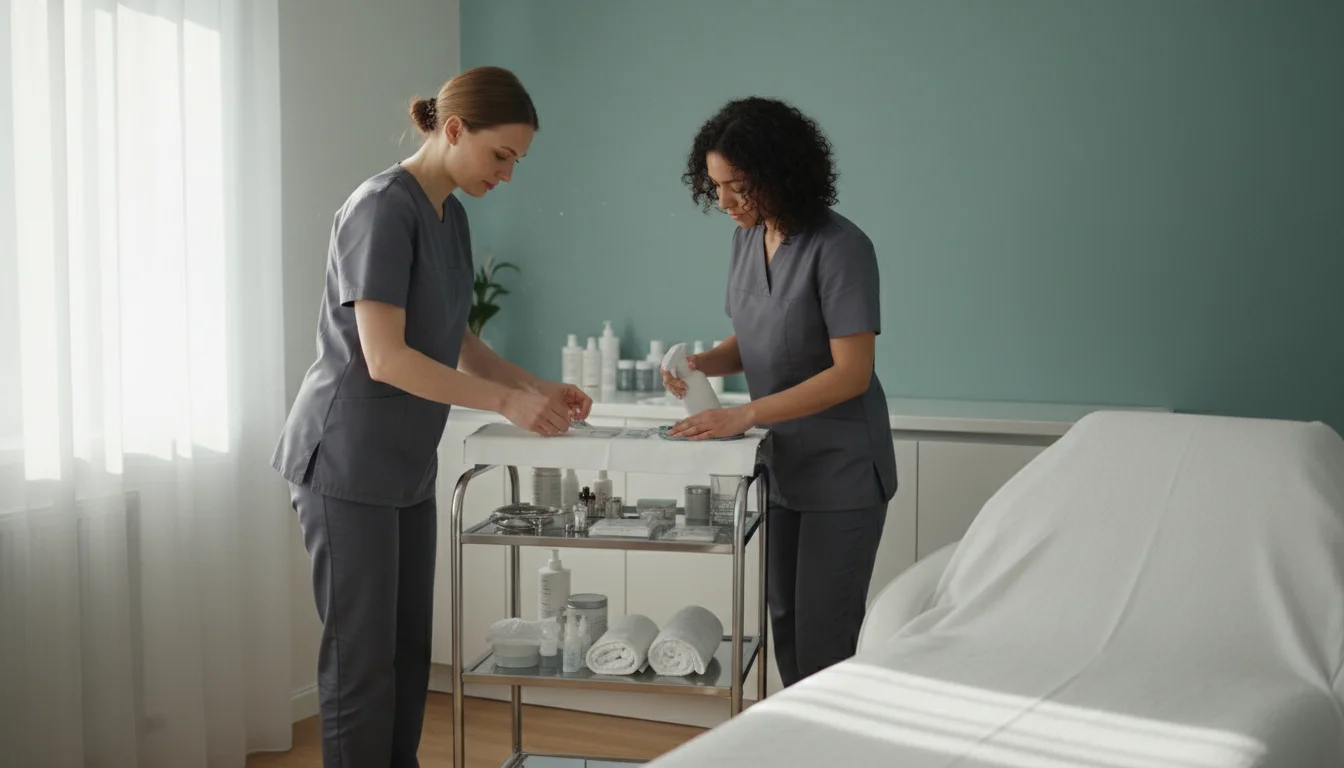
Moving beyond the wax pot, you have to think about every single surface and tool that might touch a client. Treatment beds need to be covered with fresh, disposable paper or linens for every single person. Technicians must wash their hands thoroughly before and after every service and put on a fresh pair of gloves for each appointment. If tools like tweezers are reusable, they have to go through a whole sterilization process that usually involves cleaning them, soaking them in a high-level disinfectant, and maybe even running them through an autoclave, depending on the tool and your state’s rules. We even check how well these procedures are working, sometimes using biological indicators in the autoclaves, to make sure the equipment is truly sterile. This intense focus on cleanliness defines responsible service.
Discover the smoothest way to stay hair-free
Expert waxing that leaves you smooth for weeks. Find a top-rated studio near you.
Find a Wax Center Near You →Managing your trash is also a huge part of hygiene. All your contaminated stuff, used wax strips, cotton pads, gloves, has to go into designated, covered trash cans to keep germs from spreading around the studio. If you have any implements that could puncture the skin, they go into a sharps container, following the same strict biohazard guidelines a doctor’s office would. These steps show a real understanding of microbiology and public health, proving you’re committed to protecting every single person who comes in your door.
Technician Training and Certification: The Human Element of Safety
Great protocols and a sterile room don’t mean much if the person doing the waxing isn’t competent. The technician’s skill is a huge piece of regulatory compliance and client safety. Every pro must have a current esthetician or cosmetology license from their state’s board. Getting that license means they’ve put in hundreds of hours of required training, passed difficult written and hands-on exams, and proved they know their stuff when it comes to skin care, sanitation, and waxing. But that license is just the starting line.
The best studios invest in continuous education for their staff. This keeps them up-to-date on advanced waxing techniques, new sanitation rules, and how to spot skin conditions or contraindications. This includes special training for different waxes (like hard wax vs. soft wax), how to prep the skin properly, and what to do for effective post-waxing care to reduce irritation and ingrown hairs. A trained tech doesn’t just know how to rip hair out. They can look at a client’s skin, spot potential problems like a sunburn or an active infection, and know when to say no. For example, if a client is using a retinoid or certain acne meds, a good tech will know not to wax that super-sensitive skin because of the risk of lifting or tearing.
On top of that, good techs are trained for emergencies. They know how to handle an allergic reaction, unexpected bleeding (which is rare, but possible), or any other weird response from a client. They get why client intake forms are so important for gathering medical history, allergies, and medication info. This thoughtful approach to training and client evaluation is what lets a pro studio deliver a safe, effective service time and time again, setting them miles apart from the unregulated alternatives.
Client Consultation and Aftercare: Helping Informed Decisions
The client consultation is one of the most critical parts of waxing safety and regulatory compliance, though it’s often rushed. Before you even think about starting a service, a detailed consultation gives the technician a full picture of the client’s health and skin. This usually means filling out an intake form where clients list any allergies, medications (especially skin-sensitizing ones like retinoids or Accutane), recent sun exposure, and skin conditions. This form is a vital diagnostic tool. For example, if you wax over sunburned skin or an area with active eczema, you could cause serious skin damage, so it has to be avoided.
The consultation is also the time for the technician to walk the client through the process, explain the possible risks like temporary redness, and set realistic expectations. This kind of open conversation builds trust and helps clients feel good about their decision. It’s also the perfect chance for the tech to spot any red flags that would make waxing unsafe for that person, and then either suggest an alternative or postpone the service. This proactive work prevents bad reactions and shows the studio is serious about safety.
Just as important is giving clear, simple aftercare advice. Every client should leave with specific instructions on how to care for their skin to avoid common problems like irritation, redness, and ingrown hairs. This advice usually includes telling them to steer clear of hot baths, tight clothes, and rough exfoliants for a day or two, and giving them tips on gentle cleansing and moisturizing. Giving them this info, both by telling them and handing them a printout, helps them to protect their results and avoid problems, showing a commitment to their well-being that goes beyond the four walls of the treatment room.
Audits and Quality Assurance: Continuous Vigilance
You can’t just set your safety standards and walk away. Keeping up with regulatory compliance and waxing safety takes constant effort. Professional waxing studios have internal quality assurance programs to check in on themselves and make sure they’re following all the rules. This usually involves scheduled internal audits where a manager or safety officer goes through sanitation logs, checks that products aren’t expired, inspects the equipment, and watches technicians work. The whole point of these audits is to find any small slips before they turn into big problems.
On top of your own internal checks, you’ve got external inspections from the state cosmetology board and local health department, which act as a third-party check on your compliance. These inspections can happen at any time without warning, and they look at everything: how clean the place is, how you’re getting rid of waste, whether your technicians’ licenses are current, and if you’re using disinfectants the right way. Passing an inspection is a public stamp of approval that says your studio is committed to safety. If they find anything wrong, you’re expected to fix it fast, and they’ll often come back to make sure you did.
Client feedback, like satisfaction surveys or just talking to people, also helps with quality assurance. Is it a regulatory thing? No, but listening when a client tells you about their comfort, the cleanliness, or a reaction they had after the service can give you amazing insight on where you can improve. This whole approach, internal checks, external inspections, and client feedback, creates a business where safety is a consistently met standard. It’s an expensive commitment, frankly, but one that is absolutely essential for any business serious about its clients’ health and its own reputation.
Following strict safety rules in professional waxing builds a foundation of trust with every single client. When you make hygiene, rigorous staff training, transparent consultations, and constant quality checks your top priorities, you’re showing an undeniable commitment to their well-being. That dedication is what makes every waxing experience not only effective but consistently safe and comfortable.
What license does a waxing technician need?
In most places, a waxing technician needs a valid esthetician or cosmetology license. This is issued by their state’s board of cosmetology after they’ve completed a set number of training hours and passed state board exams.
Why is the “no double-dipping” rule so important?
The “no double-dipping” rule is a hard line against cross-contamination. Putting a used applicator back into a wax pot introduces bacteria and skin cells into the main supply, creating a huge infection risk for every client who comes after.
How are waxing tools actually sterilized?
Reusable tools like metal tweezers have to go through a few steps. First, they’re cleaned to get all the physical debris off. Then, they’re fully submerged in a hospital-grade, EPA-registered disinfectant for a specific amount of time. For some tools, especially if they could break the skin, an autoclave might be used for sterilization.
What information do you collect in a pre-waxing consultation?
A good consultation gathers key info like the client’s medical history, any medications they’re on (especially skin-sensitizing ones like retinoids), allergies, recent sun exposure, and existing skin conditions. This is how you spot contraindications and perform the service safely.
What are the most common aftercare instructions after a wax?
Typically, clients are told to avoid hot baths, saunas, tight clothing, and any harsh exfoliants for at least 24-48 hours. They’re also advised to keep the area clean, use a good moisturizer, and stay out of the sun to reduce irritation and help prevent ingrown hairs.


