 By Editorial Team
Key Takeaways
- The ideal hair length for waxing is consistently between 1/4 inch (0.6 cm) and 1/2 inch (1.27 cm) across all body areas, regardless of hair type.
- Exceeding 1/2 inch in hair length significantly increases discomfort and the risk of hair breakage, leading to an inferior waxing experience and requiring immediate trimming.
- Proper pre-waxing preparation, including exfoliation and avoiding lotions, is just as critical as precise hair length for achieving optimal hair removal and preventing ingrown hairs.
- Regular waxing appointments, spaced every 3-6 weeks, promote finer, sparser regrowth, making future waxing sessions more effective and less painful.
- Attempting to wax hair shorter than 1/4 inch results in poor adhesion of the wax to the hair, leading to incomplete removal and skin irritation, necessitating regrowth before re-attempting.
Getting the hair length for waxing just right is the absolute cornerstone of a successful hair removal experience in 2026. Too short, and the wax can’t grip; too long, and you’re in for unnecessary pain and potential breakage. So, what’s the magic number that ensures a smooth, lasting result every time?
The Golden Rule of Hair Length: 1/4 to 1/2 Inch
Let’s cut to the chase: the sweet spot for hair length for waxing is consistently 1/4 inch (0.6 cm) to 1/2 inch (1.27 cm). This isn’t some arbitrary guideline; it’s based on the physics of wax adhesion and hair follicle extraction. When your hair falls within this range, the wax can properly encapsulate the hair shaft without becoming overwhelmed, allowing for a clean, efficient pull from the root. Anything outside this window, and you’re asking for trouble, plain and simple.
I’ve seen countless clients, especially first-timers, come in with hair that’s either barely visible or long enough to braid. Neither scenario works. If the hair is shorter than 1/4 inch, the wax simply won’t adhere effectively. You’ll end up with patchy results, irritated skin from multiple attempts, and ultimately, wasted time and money. It’s like trying to grab a handful of sand – it just slips through your fingers. Conversely, if the hair is much longer than 1/2 inch, the wax can pull too much on the skin, causing excessive pain, bruising, and a higher chance of hair breaking at the surface instead of being removed from the follicle. This leads to stubble appearing much faster and increases the likelihood of ingrown hairs. My advice? When in doubt, err on the side of slightly longer, then trim.
Consider the hair growth cycle itself. Hair doesn’t all grow at the same rate or in perfect unison. For instance, according to a comprehensive study on hair biology published in the Journal of Investigative Dermatology, human hair follicles exhibit asynchronous growth cycles, meaning different hairs are in different stages (anagen, catagen, telogen) at any given time. This asynchronous growth is why you’ll never achieve 100% hair removal in a single waxing session, but aiming for that 1/4 to 1/2 inch ensures you’re catching the maximum number of hairs in their optimal growth phase for extraction. We aim for efficiency, not miracles.
Why Precision Trimming is Your Best Friend
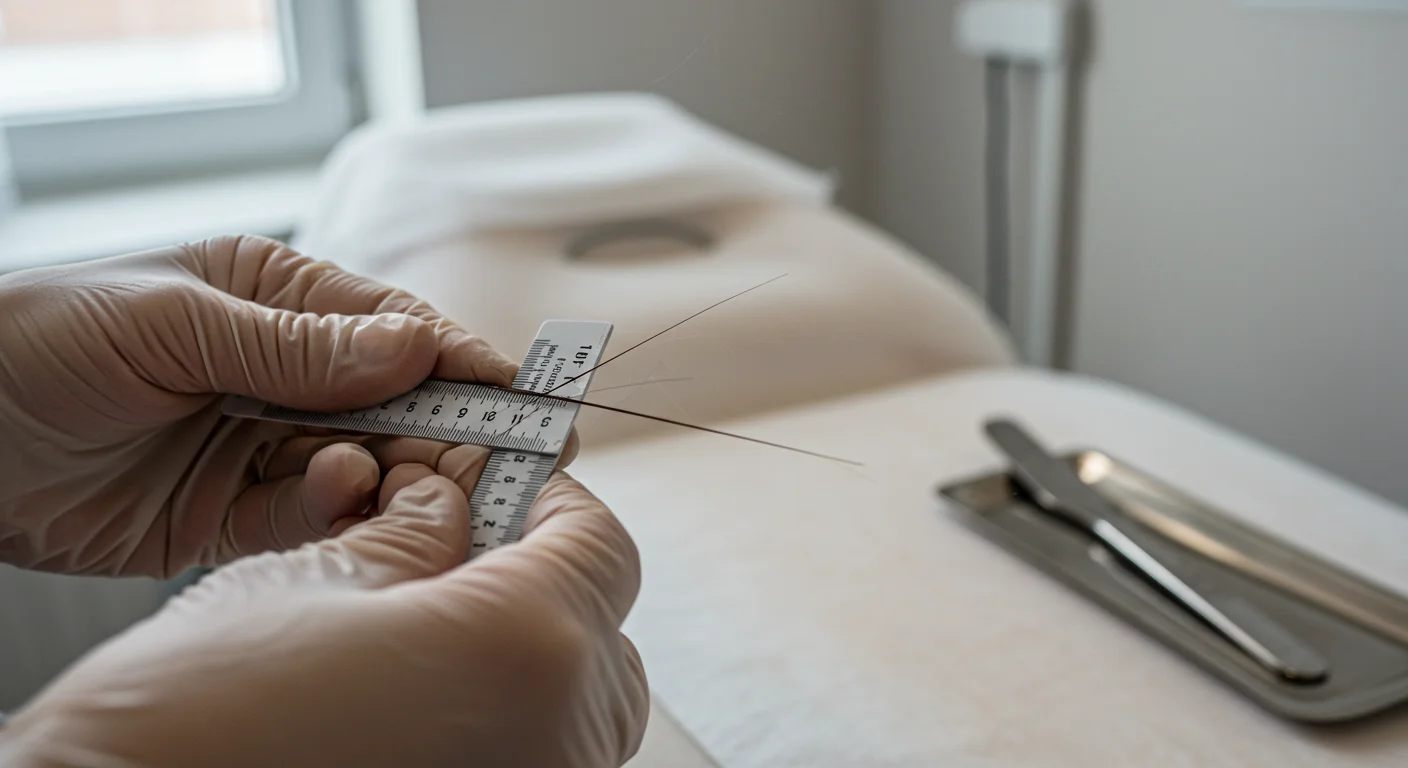
If your hair is longer than 1/2 inch, you absolutely must trim it down. I recommend using a small pair of grooming scissors or an electric trimmer with a guard. Don’t eyeball it; use a ruler or a measuring tape to get it right. Trust me, the extra five minutes you spend trimming will save you a world of discomfort during the actual waxing. I had a client last year, a lovely gentleman getting his back waxed for the first time. He came in with about an inch of hair, convinced “longer is better” for the wax to grip. We spent an agonizing 20 minutes just trimming before we could even begin waxing. His experience, and mine, would have been infinitely better if he’d just trimmed at home. Now, he’s a trimming evangelist.
For those prone to letting hair grow out, perhaps between longer waxing sessions, remember that the goal isn’t just hair removal but also skin health. Excessively long hair can get tangled, causing more surface irritation during the wax application and removal. Think of it as trying to pull a tangled knot versus a straight string – one is far more cooperative.
Pre-Waxing Preparation: Beyond Hair Length
Achieving perfect hair length for waxing is only half the battle. What you do before and after your waxing appointment dramatically impacts the results, comfort, and longevity of your smooth skin. This isn’t optional; it’s fundamental to waxing education.
First, exfoliation. I cannot stress this enough. Gently exfoliating the skin 24-48 hours before your waxing appointment removes dead skin cells that can trap hair and prevent the wax from adhering properly. It also helps to prevent ingrown hairs. Use a mild physical exfoliant or a chemical exfoliant with ingredients like salicylic acid. The American Academy of Dermatology Association (AAD) consistently recommends gentle exfoliation as a key strategy for preventing ingrown hairs and improving skin texture. Just don’t overdo it, especially if you have sensitive skin, as that can lead to irritation.
Second, avoid lotions, oils, and deodorants on the day of your appointment. These products create a barrier between the wax and the hair, hindering adhesion. Your skin needs to be clean and dry. If you’re coming from the gym or a long day, a quick shower beforehand is always a good idea. We always prep the skin with a pre-wax cleanser at our studio, but starting with a clean slate at home makes a huge difference.
Discover the smoothest way to stay hair-free
Expert waxing that leaves you smooth for weeks. Find a top-rated studio near you.
Find a Wax Center Near You →Third, consider your pain tolerance. While hair length is critical for minimizing discomfort, some people benefit from taking an over-the-counter pain reliever like ibuprofen about 30-45 minutes before their appointment. This isn’t a substitute for proper hair length or technique, but it can take the edge off for those with lower pain thresholds. I’ve seen clients visibly relax after remembering they took their pain meds. It’s a small detail that can make a big difference for some.
The Science of Skin Preparation
The skin is our largest organ, and treating it with respect before any invasive procedure, including waxing, is paramount. Proper hydration, both internally and externally, contributes to skin elasticity, which can make hair removal less traumatic. A study published in the Journal of Cosmetic Dermatology highlighted the importance of skin barrier function in managing post-depilation irritation, emphasizing that well-hydrated skin tends to recover faster and exhibit less inflammation. So, drink your water, keep your skin moisturized daily (just not on waxing day!), and you’ll set yourself up for success.
We also ensure our clients understand the importance of avoiding sun exposure or tanning beds for at least 24-48 hours before waxing. Sunburned skin is compromised skin, and waxing compromised skin can lead to severe irritation, lifting, or even blistering. It’s a non-negotiable safety measure.
The Impact of Regular Waxing on Hair Length and Growth
One of the most compelling reasons to commit to a regular waxing schedule (typically every 3-6 weeks, depending on your individual hair growth cycle) is its profound impact on future hair growth. This is a core tenet of effective waxing education. Consistent waxing, when done correctly, can lead to hair growing back finer, sparser, and even slower over time. This means future waxing sessions become less painful and more efficient, making that initial focus on ideal hair length even easier to maintain.
When hair is repeatedly pulled from the root, the follicle can become damaged and weakened. This doesn’t mean it dies (though some follicles may, leading to permanent reduction in certain areas for some individuals), but it often produces a thinner, lighter hair shaft. A 2023 review in Dermatologic Surgery discussed the long-term effects of various depilatory methods, noting that repeated epilation (like waxing) can gradually reduce hair diameter and density. This is exactly what we aim for.
Think of it as training your hair. We’re essentially disrupting its natural growth pattern. When you shave, you cut the hair at its thickest point, leaving a blunt edge that feels coarser as it grows back. Waxing removes the entire hair, allowing it to regrow with a tapered, finer tip. This is why the “stubble” from waxing feels so much softer than shaving stubble.
Case Study: Sarah’s Journey to Smoother Skin
Let me share a quick case study. Sarah, a 32-year-old client, started coming to us for Brazilian waxes about two years ago. Initially, her hair was thick, coarse, and grew back quickly. Her first few appointments were a bit uncomfortable, and she struggled a little with getting the hair length just right between sessions. We advised her on consistent trimming to that 1/4 to 1/2 inch mark and committed her to a strict 4-week cycle.
Fast forward to 2026: Sarah now finds her waxing sessions significantly less painful. Her hair is noticeably finer, and she has fewer ingrown hairs than ever before. We’ve even been able to extend her appointments to every 5-6 weeks because her regrowth is so much slower and sparser. Her pre-waxing routine, including exfoliation and meticulous trimming, is now second nature. This isn’t magic; it’s the consistent application of sound waxing principles, starting with the correct hair length and maintaining a regular schedule. Her skin is healthier, and her confidence is through the roof. That’s the power of committed waxing.
Common Mistakes and How to Avoid Them
Even with the best intentions, people make mistakes when preparing for waxing. Understanding these pitfalls is a crucial part of waxing education and will save you discomfort and disappointment.
The most common error, hands down, is underestimating the importance of hair length for waxing. Clients often think “longer is better” or “shorter will be less painful.” Both are incorrect. As we’ve established, too short and the wax can’t grip; too long and it’s unnecessarily painful and inefficient. My strong opinion? If you’re unsure, ask your esthetician. Most reputable salons, including ours, are happy to advise you over the phone or during a quick consultation. We’d rather you come in with perfectly prepped hair than struggle through a difficult session.
Another frequent mistake is scheduling waxing too close to a major event without prior experience. If you’ve never waxed before, do not get a full leg or bikini wax the day before a beach vacation or a wedding. Skin can be sensitive, red, and sometimes even prone to minor breakouts immediately after waxing. Give yourself at least 48 hours, ideally a full week, to allow your skin to calm down and for any potential reactions to subside. This is especially true for sensitive areas.
Finally, ignoring post-waxing care. The skin is vulnerable after waxing. Skipping moisturizing, wearing tight clothing, or exposing freshly waxed skin to excessive heat (hot baths, saunas, intense workouts) can lead to irritation, bumps, and ingrown hairs. Aftercare is just as vital as prep. Use a soothing, non-comedogenic moisturizer, wear loose cotton clothing, and avoid harsh products or sun exposure for at least 24 hours. The International Dermal Institute (IDI) consistently publishes guidelines emphasizing gentle aftercare to maintain skin integrity post-depilation.
The “Nobody Tells You This” Moment
Here’s something nobody really tells you: the first wax is almost always the most uncomfortable. Your hair follicles are at their strongest, your hair is likely at its thickest, and your nerve endings are, well, unprepared. Subsequent waxes become significantly easier because the hair grows back finer and the follicles are weaker. So, if you have a rough first experience, don’t give up! It gets better, much better. It’s an investment in future comfort. Also, and this is a big one, don’t shave between waxing appointments. Ever. Shaving disrupts the growth cycle, making your next wax less effective and potentially more painful, effectively resetting all the progress you’ve made. It’s a betrayal of your follicles!
Conclusion
Mastering the ideal hair length for waxing—that sweet spot of 1/4 to 1/2 inch—combined with diligent pre- and post-care, is the definitive path to achieving smooth, long-lasting results and transforming your hair removal routine in 2026.
What happens if my hair is too short for waxing?
If your hair is shorter than 1/4 inch (0.6 cm), the wax will not be able to properly grip the hair shaft. This results in patchy hair removal, requiring multiple passes over the same area, which can lead to skin irritation, redness, and a less effective overall waxing experience. You’ll likely need to wait for your hair to grow out more before attempting to wax again.
What if my hair is too long for waxing?
When hair is longer than 1/2 inch (1.27 cm), waxing becomes significantly more painful because the wax pulls on a greater length of hair and can tug at the skin more aggressively. It also increases the risk of hair breakage at the surface instead of removal from the root, leading to quicker regrowth and a higher chance of ingrown hairs. It’s always best to trim excessively long hair down to the recommended length before your appointment.
How can I accurately measure my hair length at home?
To accurately measure your hair length, you can use a small ruler or a measuring tape. Gently pull a few hairs taut and place the ruler against them to gauge their length. For hard-to-reach areas, a mirror can be helpful, or you might ask a trusted friend or partner for assistance. Precision is key to ensuring optimal waxing results.
Can I trim my hair myself before a waxing appointment?
Yes, absolutely! Trimming your hair down to the ideal 1/4 to 1/2 inch length at home before your waxing appointment is highly recommended, especially if your hair is quite long. Use clean grooming scissors or an electric trimmer with a guard. This saves time during your appointment and significantly improves comfort and effectiveness. When in doubt, trim slightly less than you think you need, as your esthetician can always do a final touch-up.
Does hair length vary for different body parts when waxing?
No, the ideal hair length of 1/4 inch to 1/2 inch (0.6 cm to 1.27 cm) remains consistent across all body parts, whether you’re waxing legs, arms, underarms, or bikini areas. While hair texture and density might differ, the principle of wax adhesion and effective hair removal from the follicle requires the hair to be within this specific length range for optimal results.


