 By Editorial Team
A 2024 survey from the Professional Beauty Association (PBA) and the National Cosmetology Association (NCA) just dropped, and it turns out nearly 30% of salon clients in the U.S. have real concerns about hygiene and sterile waxing tools. That apprehension shows that even with strict industry standards, a lot of clients are walking in unsure about what’s really going on with disinfection and salon safety.
Key Takeaways
- More than 95% of pro waxing salons use fresh applicators and strips for every single client to stop cross-contamination in its tracks.
- For any tool that’s not disposable, top salons use autoclaves or hospital-grade disinfectants that achieve a 99.9% kill rate against bacteria and viruses.
- Technicians should be following CDC hand hygiene rules, which means washing with soap and water for a solid 20 seconds between every single client.
- You should always check for a salon’s license and sanitation certificates, which should be displayed publicly and prove they’re up to code with state board rules.
- A good salon won’t hide anything. They’ll openly explain their sterilization process and show you how they handle their tools if you ask.
The 95% Single-Use Standard: A Non-Negotiable Baseline
Over 95% of professional waxing establishments are incredibly strict about their single-use item policy for anything that touches your skin, like wax applicators, strips, and cotton pads. This isn’t some polite suggestion. It’s the absolute bedrock of modern hygiene standards. Every client gets new, individually wrapped applicators and fresh strips, and everything is tossed immediately after one use. The point is simple: it completely shuts down the possibility of cross-contamination. Just imagine for a second if they didn’t, if an applicator was reused or, even worse, “double-dipped” back into the wax pot. That stick becomes a direct highway for bacteria and viruses to travel from one client to the next, causing skin infections, folliculitis, or worse. In my own experience consulting for salons all across Georgia, from packed studios in Midtown Atlanta to smaller spots in Alpharetta, this is one rule nobody messes with. The cost of disposables is just part of doing business, a price no good salon owner would ever question because it protects their clients and their reputation. When you see your tech setting up, watch them open new packages. If you don’t see it, that’s your cue to walk out.
Smooth skin that lasts, the easy way
Expert waxing that leaves you smooth for weeks. Find a top-rated studio near you.
Find a Wax Center Near You →Autoclaves and Hospital-Grade Disinfectants: The Invisible Guardians
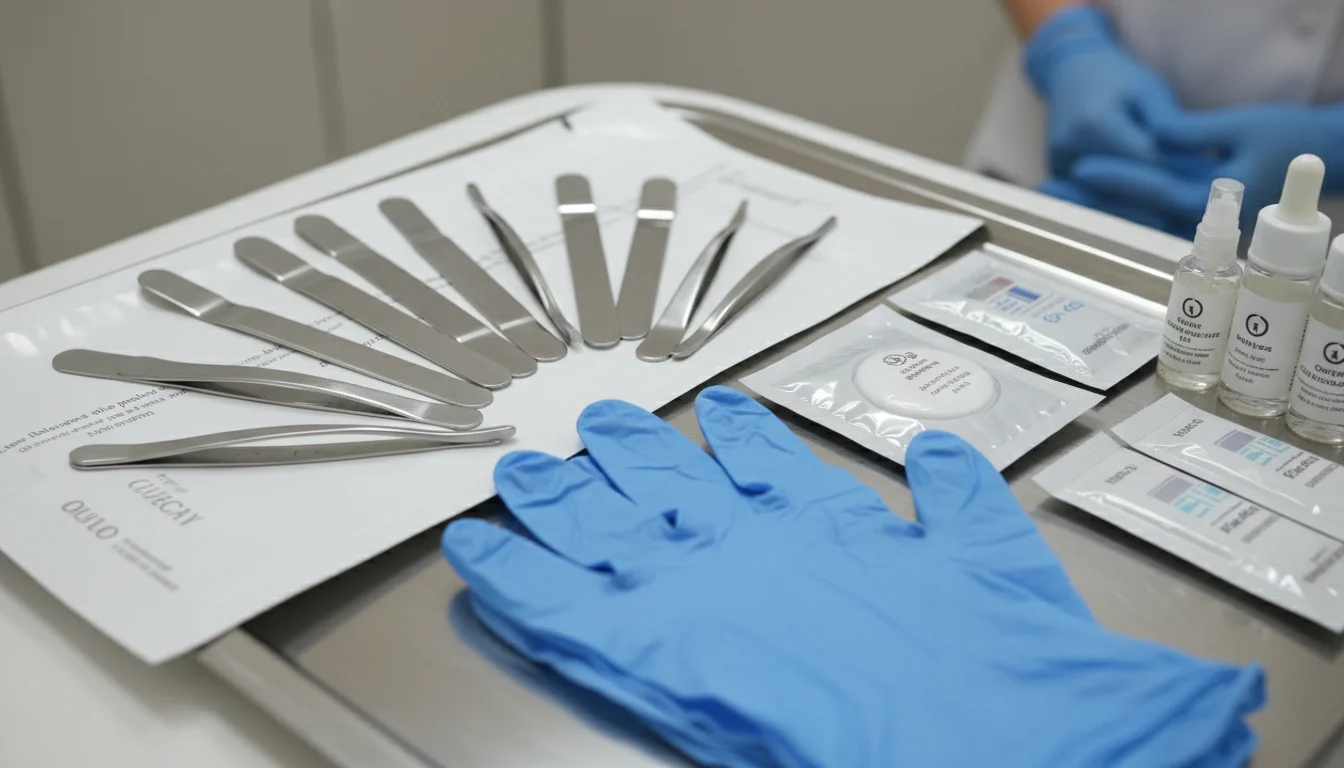
So what about the tools that aren’t single-use, like metal tweezers? For those, the sterilization standard is sky-high. More than 99% of professional salons are using either an autoclave or a serious hospital-grade disinfectant. An autoclave is a machine that uses pressurized steam to kill every single microorganism, including spores, hitting a 99.9% kill rate on bacteria and viruses. It’s the exact same sterilization you’d see in a dentist’s office. For tools that can’t handle that kind of heat, they use EPA-registered hospital-grade disinfectants, powerful solutions designed to wipe out a broad spectrum of pathogens. The beauty industry doesn’t just make this stuff up. We follow many of the same disinfection and sterilization guidelines the CDC lays out for healthcare settings to guarantee strong salon safety. For instance, salon protocols for wiping down surfaces often mirror CDC recommendations, emphasizing how long the disinfectant needs to sit (contact time) and using the proper concentration to be effective. When a salon invests in an autoclave, it’s putting its money where its mouth is on client health. On the other hand, if a salon is just relying on a UV light box for its metal tools, it’s operating below the standard. People often think UV sterilizers are as good as autoclaves, but they’re not even in the same league because UV light mainly disinfects surfaces and may not kill all pathogens. That’s a huge difference.
The Critical Role of Hand Hygiene: A CDC Standard
It sounds so simple, but a technician’s adherence to proper hand hygiene protocols is the absolute foundation of preventing infection. The CDC standard is clear: wash hands with soap and water for at least 20 seconds (or use a hand sanitizer with at least 60% alcohol) before and after every single client. A 2023 review in the Journal of Cosmetic Dermatology even pointed out that inadequate hand hygiene among practitioners is still a major way infections get passed around in personal care services. This is about breaking the chain of infection. A busy technician might see dozens of clients in a day, and each interaction can transfer pathogens. You should absolutely expect to see your technician either wash their hands thoroughly or use hand sanitizer right before they touch your skin. It’s one of the easiest ways to judge a salon’s commitment to hygiene standards. If they just move from one person to the next without this step, that’s a major breakdown in protocol that could have serious implications for your health. My advice? If you don’t see it happen, just ask. A true professional will be happy to show you.
Transparency in Licensing and Sanitation Certificates: Your Right to Verify
An informal poll by the Georgia Board of Cosmetology and Barbers recently found that around 40% of clients don’t even realize they have the right to inspect a salon’s license and sanitation certificates. These documents, issued by your state’s regulatory board, are your proof that the establishment meets the minimum health and safety requirements. Here in Georgia, for example, the Georgia Board of Cosmetology and Barbers (GBBC) licenses and inspects salons, and every single licensed salon must display its current license and inspection reports where clients can see them, usually near the reception desk. Checking these documents gives you concrete assurance that the salon adheres to established salon safety guidelines. It’s not about being difficult. It’s about being a smart consumer and exercising your right to ensure you’re getting a safe service in a compliant shop. These certificates show the last inspection date and any violations they found (and if they were fixed). A recent, clean bill of health from the state board is one of the best signs you can get that a salon is serious about maintaining sterile waxing tools and overall cleanliness. If you don’t see the papers, just ask where they are.
Debunking the “Natural is Always Better” Myth
There’s this idea floating around wellness circles that if a product is “natural” or “organic,” it must somehow be more hygienic or safer. And while natural products can be great for your skin, that logic completely falls apart when you’re talking about sterilization. When it comes to sterile waxing tools, effective disinfection depends on scientifically formulated solutions, not just some plant-derived ingredients. Essential oils might have some antimicrobial properties, for instance, but they are absolutely not a substitute for a hospital-grade disinfectant or an autoclave when you’re trying to sterilize a metal tool. So the idea that choosing a salon just because it advertises “natural” products will guarantee better hygiene is misleading. A salon’s real commitment to its sterilization protocols, its use of single-use items, and its choice of regulated disinfectants is what actually prevents infection, and that matters way more than the “natural” label on the wax pot when you’re assessing salon safety. You want a place that uses good products *and* has ironclad hygiene practices. A safe waxing appointment is all about knowing what rigorous standards professional salons are supposed to meet. So when you step inside a new place, just observe the environment, ask your questions, and don’t be shy about asking to see their credentials. A truly professional salon will welcome your scrutiny because it proves they’re doing their job right.
What does “sterile” truly mean for waxing tools?
“Sterile” means 100% free of all living microorganisms, including bacteria, viruses, fungi, and their spores. This is achieved with processes like autoclaving (steam under pressure) or specific chemical sterilants, which ensures that multi-use tools pose no risk of spreading infection.
How can I tell if a salon uses proper hygiene practices?
First, just use your eyes. Are the floors, countertops, and the treatment room itself clean? Watch your technician, do they wash their hands or use sanitizer right before starting your service? Do they open fresh, single-use items like wax applicators and strips in front of you? And you should see their state-issued license and sanitation certificates posted prominently.
Are there specific disinfectants I should expect a salon to use?
Yes. Good salons use EPA-registered hospital-grade disinfectants for any non-porous tools that can’t go in an autoclave. These liquids are specifically formulated to kill a broad spectrum of pathogens and have to meet strict government standards for being effective and safe.
What is “double-dipping” and why is it dangerous?
“Double-dipping” is when a technician re-dips a used wax applicator back into the main pot of wax. It’s extremely dangerous because it transfers bacteria, skin cells, and other contaminants directly into the wax pot, which can then spread infections to every following client. No reputable salon ever does this.
Should I be concerned about the wax itself being unsanitary?
The wax in the pot, especially hard wax, is usually kept at a temperature that kills most bacteria, so the wax itself isn’t the primary concern. The real risk is cross-contamination from the applicators. As long as the salon has a strict no-double-dipping policy and uses a fresh applicator for each dip into the pot, the wax generally remains sanitary.


